If you’ve ever sat down to read the Bible and thought…
How do I start?
Am I doing this right?
What am I supposed to look for?
You are not alone.
For many people, reading the Bible feels difficult and confusing – not because they don’t value it – but because they’re unsure how to actually engage with the text.
That’s where the S.O.A.P. method of reading the Bible can be really helpful. It gives us a simple, practical framework for reading Scripture in a way that moves beyond just reading words on a page and helps us to actually apply God’s Word to our lives.

This article contains affiliate links. This means if you click on a link and make a purchase, I may get a commission, but you will not be charged a penny more. Thanks for your support!
If you’re new to the topic of Bible reading, you may want to begin with my complete overview of the spiritual discipline of reading the Bible. But here, we’re going to look more closely at one simple method that can help bring structure and clarity to your time in Scripture.
What does S.O.A.P. stand for?
S.O.A.P. represents four simple steps that can help guide your Bible reading:
• Scripture – Read the passage carefully
• Observation – Notice what stands out in the passage
• Application – Ask what God is saying to you through it
• Prayer – Respond to God in prayer
Let’s look at each one more closely…
S – Scripture
The first step is simply to read a passage of Scripture.
You can choose any passage of Scripture you like, but if you’re not sure where to start, I recommend one of the following:
- Luke
- Acts
- Genesis
In each case, start at Chapter 1 and read one chapter per day (or one section, if a chapter feels too much).
Alternatively, you might like to start a Bible reading plan, which will take you on a journey through Scripture and give you a specific passage to read each day.
READ MORE >>> Which is the best Bible reading plan?
O – Observation
Next comes observation.
Observation is about noticing what the text says.
Start by asking yourself questions like:
- Who is speaking?
- Who is the audience?
- What is happening in this passage?
- What does this passage reveal about God?
- What does it reveal about people?
Jot down notes, as appropriate.
Next, re-read the text and note down in your journal any or all of the following:
- Key themes
- Words or phrases that are repeated
- Things that surprise you
- Promises, warnings or encouragements
- A verse that stands out to you
- Anything that speaks directly to your current situation
The Bible itself encourages this kind of thoughtful engagement.
For example in Joshua:
“Keep this Book of the Law always on your lips; meditate on it day and night, so that you may be careful to do everything written in it. Then you will be prosperous and successful.” – Joshua 1:8 (NIV)
And in the book of Psalms:
“Blessed is the one… whose delight is in the law of the Lord, and who meditates on his law day and night.” – Psalm 1:1-2 (NIV)
Observation trains us to slow down and pay attention rather than just skimming the text.
A – Application
Application asks the question:
“What should I actually DO?”
The Bible was never meant to be read purely for knowledge. It was meant to change us.
James writes:
“Do not merely listen to the word, and so deceive yourselves. Do what it says.” – James 1:22 (NIV)
Some helpful questions to ask include:
- Is there a command to follow?
- A promise to hold onto?
- A temptation to avoid?
- A sin to confess?
- An attitude you need to change?
- Or a thing you need to do more of?
Write down one or two concrete, actionable steps in your journal.
Then be sure to actually DO those things!
Application is where Bible reading moves from information to transformation, where Scripture begins to shape our decisions, attitudes and behaviour.
P – Prayer
Finally, we respond to God in prayer.
Start by turning what you have noted down in your journal into prayer.
This might include:
- Praising God for what the passage reveals about his character
- Confessing something the passage has highlighted
- Thanking God for what the passage says he has done for us
- Asking for help to apply what you’ve learned
After that, you can move on to praying for other things that are on your heart.
Why Use the S.O.A.P. Method?
The S.O.A.P. method is helpful because it gives structure and focus to your Bible reading.
Without structure, many people simply read a passage and move on without really engaging with it.
S.O.A.P. helps you:
- Slow down and read attentively
- Notice what the passage actually says
- Apply God’s Word to everyday life
- Respond to God in prayer
Instead of wondering what to do next, the S.O.A.P. method provides a simple, repeatable rhythm for engaging with Scripture.
Over time, this rhythm helps deepen both understanding and spiritual growth.
Is S.O.A.P. the “right” way to read the Bible?
It’s important to say this clearly: S.O.A.P. is a tool, not a rule.
There are many ways to read and study the Bible.
But if you’re new to regular Bible reading, or you often feel unsure what to do with the passage you’ve just read, S.O.A.P. provides a simple starting point.
Final thoughts
The S.O.A.P. method isn’t about studying the Bible “perfectly”.
It’s simply a practical tool to help you engage more deeply with Scripture and apply it to your life.
But be careful, the goal is not to complete a series of tasks.
The goal is to deepen your relationship with God and to live out his Word in your daily life.
Your Next Step: The 30 Day Bible Reading Challenge
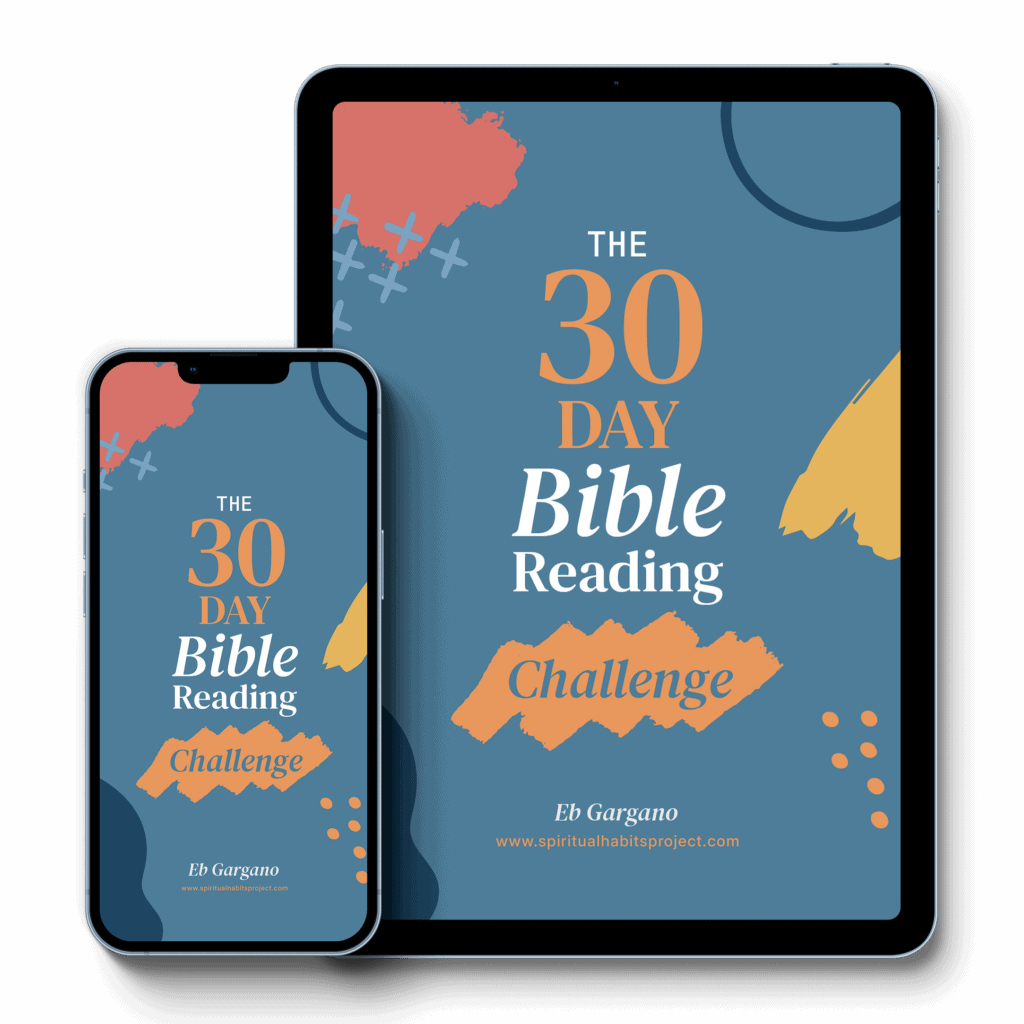
If you want help building a consistent Bible reading habit, then I invite you to join the 30 Day Bible Reading Challenge.
Each day includes:
- A short Scripture passage to read
- A brief teaching on the passage
- A guided prayer activity
- A short, related challenge to do at another point in the day
- Reflection questions to help you track your growth
In just 30 days, you’ll begin to build a foundation for a steady, sustainable Bible reading habit
Join the 30 Day Bible Reading Challenge!
Recommended resources for reading the Bible
- God’s Big Picture – Vaughan Roberts
- The Bible Course – The Bible Society
- The Bible Recap – Tara-Leigh Cobble
- The Bible Revealed – Philip Yancey & Brenda Quinn
- The NIV Life Application Study Bible – Tyndale House
READ MORE >>> Recommended resources for reading the Bible
Pin this article
Scripture copyright and permissions
For information about the Bible translations used on this website and their copyright notices, please see the Scripture copyright and permissions page.