Many people search for “Best Bible Reading Plan”.
But the truth is:
There is no single best reading plan.
Different plans work well for different people at different stages of their spiritual journey.
Some people enjoy reading the Bible in chronological order. Others prefer reading through the New Testament first.
Some people like shorter daily readings, while others prefer longer sections.
In reality, the best Bible reading plan is the one you will actually stick with!
A simple plan you follow consistently will always be more helpful than a complicated plan you keep skipping or abandon after a few weeks.
In this guide we’ll look at the different types of bible reading plan, together with their pros and cons. Then I’ll share my recommendations, together with some tips for sticking with a Bible reading plan.

This article contains affiliate links. This means if you click on a link and make a purchase, I may get a commission, but you will not be charged a penny more. Thanks for your support!
Different types of Bible reading plan
There are many different types of Bible reading plan. Here are four of the most common:
Canonical reading plans
Canonical reading plans follow the order the books appear in the Bible, starting with Genesis and finishing with Revelation.
This is the most straightforward approach.
Pros
- Very simple and easy to follow
- Allows you to read each book in full
- Matches the order most Bibles are printed in
Cons
- Many people lose momentum early in the Old Testament
- Some books and sections you hit early on (like Leviticus or genealogies) can feel heavy
- It’s a long time until you get to the Gospels
Who it suits
Canonical plans are ideal for people who prefer a simple, straightforward approach and want to read the Bible from beginning to end.
Chronological reading plans
The Bible as we know it today is not actually arranged in chronological order. Instead the books are arranged according to genre (e.g. history, wisdom, prophets, Gospels).
Chronological reading plans take you through the Bible in the order the events actually happened in history.
For example, Job is inserted into the middle of Genesis, books from the prophets are read during the historical books where they occurred, the Psalms are dotted all throughout the Old Testament and the Gospels are read simultaneously.
Pros
- Helps you understand the timeline of biblical history
- Shows how different books relate to one another
- Can make the story of Scripture easier to follow
Cons
- Jumps between books frequently
- Sometimes breaks up books in ways that feel confusing
- Some books you hit early on (like Job and Leviticus) can feel heavy
- It’s a long time until you get to the Gospels
Who it suits
Chronological plans are great for people who enjoy understanding the historical flow of the Bible and seeing how events fit together.
Topical reading plans
Topical plans focus on specific themes in the Bible, such as prayer, faith, forgiveness or wisdom.
Instead of reading through entire books, they guide you through passages related to the topic.
Pros
- Very practical and application-focused
- Helpful for addressing specific spiritual questions
Cons
- Does not provide a full overview of the Bible
- Can jump around between many different books
Who it suits
Topical plans work well for people who want to study a specific theme or area of spiritual growth.
Gospels-first reading plans
Many plans recommend starting with the Gospels before reading the rest of the New Testament and then the Old Testament.
This helps readers begin with the life and teachings of Jesus.
Pros
- Introduces readers to Jesus immediately
- Often easier to read and stick to
- Less likely to lose momentum
- Allows you to read each book in full
- Allows you to read the Old Testament in the light of the New Testament
Cons
- Does not provide the backstory for New Testament
- Some people stay in the New Testament and never make it to the Old Testament
- Some people find reading all 4 Gospels back-to-back gets a bit “samey”
Who it suits
This type of plan is excellent for new Christians or people reading the Bible for the first time.
Recommended Bible reading plans
Here are 3 recommendations, covering all these different types of Bible reading plan to help you choose the right one for you…
The Bible App
Here you will find all types of Bible reading plan: canonical, chronological, topical and Gospel first.
Simply download the app, search for what you want and start.
If you want a very simple one year canonical plan, try the Blue Letter Bible Canonical Plan
Pros
- Easy and beginner friendly
- Built in reminders and encouragement to “keep your streak”
- A huge amount of choice
- Convenient and portable – it’s right there on your phone
Cons
- Too much choice – can lead to analysis paralysis
- Not all plans are well written
- The fact that it’s on your phone can mean you get distracted by notifications
Who it suits
This Bible App works well for people who want lots of choice, reminders and the convenience of it being on your phone. It does not suit people who are easily distracted by notifications or who find decision-making hard!
The Bible Recap
If you want to read the whole Bible in one year, I highly recommend The Bible Recap by Tara-Leigh Cobble.
This plan takes readers through the entire Bible in one year using a chronological format.
What makes The Bible Recap especially helpful is that each day includes a short summary and explanation of the passage you have just read. These explanations help you understand the bigger picture and connect the different parts of Scripture.
You can find this plan on the Bible App, but it’s also available on YouTube, as a podcast and as a physical book: The Bible Recap by Tara-Leigh Cobble
Pros
- Clear daily structure
- Helpful explanations for each passage
- Excellent for understanding the Bible as a whole
- Lots of different formats to choose from
Cons
- Requires reading several chapters per day
- The pace can feel demanding for some people
- A lot of hard books, like Job and Leviticus early on
- The chronological nature can feel disjointed and confusing for some people
Who it suits
The Bible Recap works well for people who enjoy a structured plan with daily teaching and explanation. It does not suit people who feel daunted by 3+ chapters per day, nor does it suit people who dislike jumping around the Bible.
The MNM-GLEJ Plan
One Bible reading plan I often recommend is what I call the MNM-GLEJ plan. This is the plan I developed for myself after struggling with some of the disadvantages of other plans.
The name may sound a little unusual, but it’s simply an easy way to remember the reading order.
It stands for:
M – Matthew
N – New Testament
M – Mark
G – Genesis to 2 Chronicles
L – Luke
E – Ezra to Malachi
J – John
This plan is essentially a Gospel-first Bible reading plan, but it fixes a couple of the main issues with Gospel-first plans.
Firstly the four Gospels are not bunched together at the start of the plan. You only read Matthew, then jump forward to Acts
Secondly, the remaining Gospels are spaced throughout the plan. This breaks up the plan nicely and ensures readers regularly return to the life and teachings of Jesus.
I recommend aiming to read one chapter per day. At that pace it will take a little over 3 years to read the bible. (3 years and 94 days to be exact!)
This slower pace makes the plan manageable for most people, while still helping you read the entire Bible in a reasonable time-frame.
Pros
- Much more manageable daily reading than ‘Bible in one year’ plans
- Keeps the Gospels central
- Allows you to read the Old Testament in the light of the New Testament
- Tricky books are later in the reading plan
- You read whole books – no jumping about
Cons
- It takes a little over 3 years to read the whole Bible
- One chapter per day is still too much for some people
- Not chronological
- Not on the Bible App / no printed plan (though I’ll create this if enough people ask for it!)
Who it suits
This plan works well for people who want a sustainable long-term rhythm of Bible reading without feeling overwhelmed. It does not suit people who want to get the Old Testament backstory before reading the New Testament.
Tips for sticking with a Bible reading plan
Choosing a good reading plan is important, but sticking with it is even more important.
Here are a few tips that can help.
Start small
It’s better to begin with a manageable reading plan than an ambitious one that quickly becomes overwhelming.
Choose a consistent time
Many people find it helpful to read the Bible first thing in the morning, before the day becomes busy and distracting.
Don’t worry about perfection
You will occasionally miss a day. That’s normal. Simply pick up where you left off and keep going.
Focus on consistency, not speed
The goal is not to finish as quickly as possible. The goal is to build a steady habit of reading God’s Word.
READ MORE >>> How to read the Bible: step-by-step
Final thoughts
Bible reading plans are simply tools to help you develop a consistent rhythm of spending time in Scripture.
There is no single “perfect” plan. The best reading plan is the one that helps you read the Bible regularly and understand it more clearly.
Whether you prefer a chronological plan, a simple beginning-to-end approach, or a slower method like the MNM-GLEJ plan, the most important thing is simply to start and keep going.
Over time, the habit of daily Bible reading will deepen your understanding of God’s Word and strengthen your relationship with him.
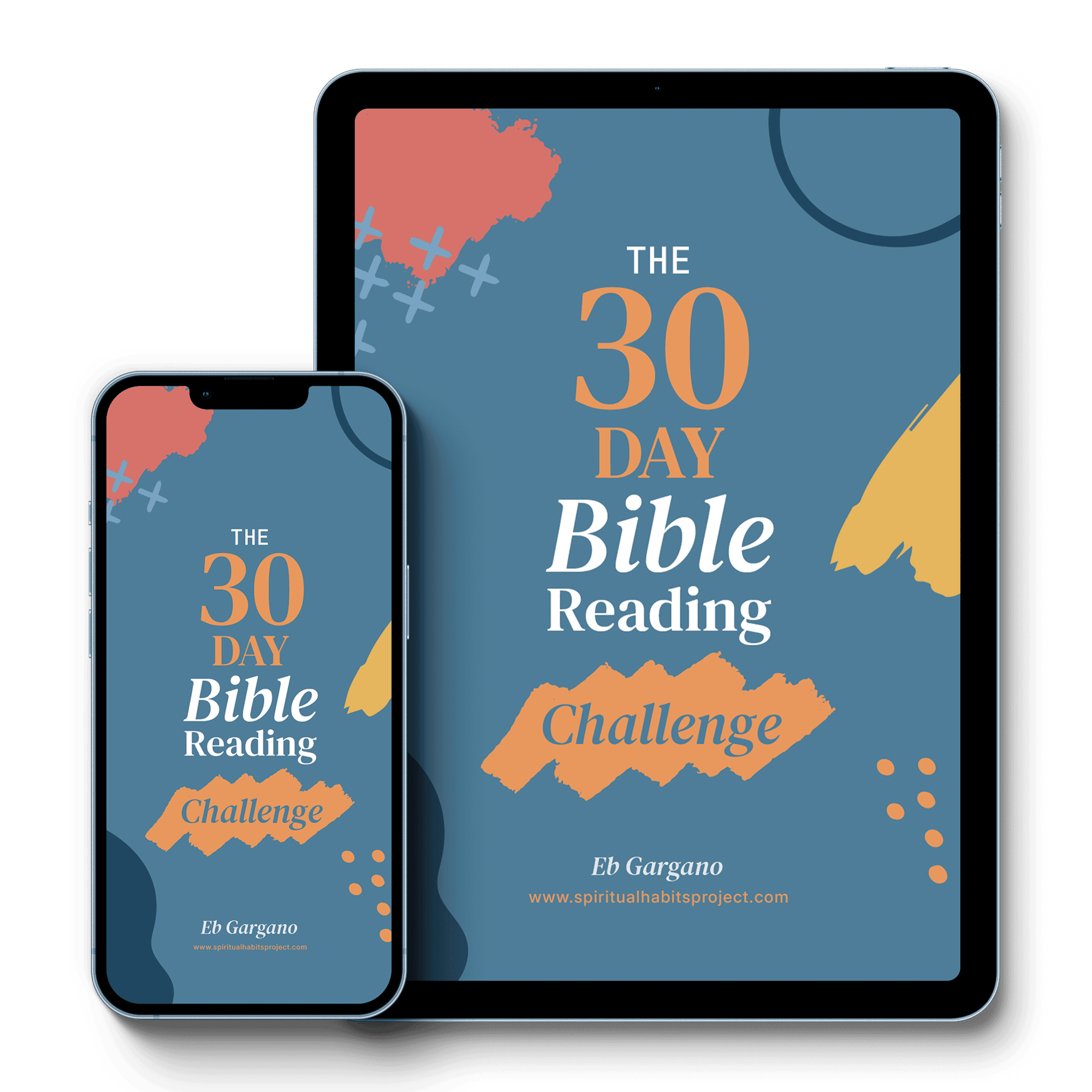
Your Next Step: The 30 Day Bible Reading Challenge
If you want help building a consistent Bible reading habit, then I invite you to join the 30 Day Bible Reading Challenge.
Each day includes:
- A short Scripture passage to read
- A brief teaching on the passage
- A guided prayer activity
- A short, related challenge to do at another point in the day
- Reflection questions to help you track your growth
In just 30 days, you’ll begin to build a foundation for a steady, sustainable Bible reading habit
Join the 30 Day Bible Reading Challenge!
Recommended resources for reading the Bible
- God’s Big Picture – Vaughan Roberts
- The Bible Course – The Bible Society
- The Bible Recap – Tara-Leigh Cobble
- The Bible Revealed – Philip Yancey & Brenda Quinn
- The NIV Life Application Study Bible – Tyndale House
READ MORE >>> Recommended resources for reading the Bible
Pin this article

Scripture copyright and permissions
For information about the Bible translations used on this website and their copyright notices, please see the Scripture copyright and permissions page.