
The Bible makes it pretty clear that fasting is an expected practice for Christians today.
But how do you actually do it?
In this guide to fasting for Christians, I’ll walk you step by step through how to get started with fasting, along with plenty of practical tips, encouragement and biblical wisdom to help you along the way.

This article contains affiliate links. This means if you click on a link and make a purchase, I may get a commission, but you will not be charged a penny more. Thanks for your support!
Step 1: Understand your why
Before you begin fasting, it’s important that you understand WHY you are fasting.
Fasting in the Bible is never random or meaningless – it always has a purpose.
For example:
- To seek God (Ezra 8:21–23)
- To humble ourselves before God (Joel 2:12–13)
- To strengthen prayer (Daniel 9:3)
- To seek guidance (Acts 13:2–3)
- To express repentance (Jonah 3:5–10)
Without a clear WHY, fasting can easily become:
- A box-ticking exercise
- A test of willpower
- An attempt to show off how ‘holy’ you are
- Or something you give up on quickly
If you haven’t already, I recommend you read my complete guide to the spiritual discipline of fasting.
Step 2: Start small
If this is your very first fast, I strongly recommend you do not begin with something extreme.
Instead I recommend you begin with something small and achievable.
For example:
- Fast one meal
- Do a partial fast for one day
- Fast social media and/or TV for one day
Once you have successfully completed a small fast, you could attempt something more challenging – such as fasting two meals or a partial fast / non-food fast for two days.
Step 3: Get prepared
Before you begin your first fast, take time to prepare your heart. Pray to God and ask him not only to help you fast, but also to draw closer to him during that time. Ask him too to help you with the purpose of your fast – for example, to give you guidance or strengthen your prayers.
It’s also wise to prepare practically:
- Choose the day/time/meal
- Tell anyone who really needs to know (e.g. your family)
- Plan how you will use the time you gain (e.g. prayer, reading the Bible)
Step 4: Get medical advice (if needed)
If you are planning any type of food fast, but are at all unsure whether that is advisable for you personally, health-wise, it’s important to seek medical advice.
For example if you:
- Have a medical condition
- Are on particular medications that have to be taken with food
- Are pregnant or breastfeeding
- Have a history of disordered eating
If a full fast isn’t appropriate for you, there are still many alternative ways to fast:
- A partial fast (e.g. Daniel Fast)
- Fasting one specific food or drink (e.g. chocolate, cake, coffee or alcohol)
- A non-food fast (e.g. social media, TV, hobbies)
God is much more interested in your heart than the specific format of your fast.
READ MORE >>> What are the different types of Christian fast?
Step 5: Replace food with God
This is one of the most important principles of fasting.
Fasting is not just about going without food (or whatever non-food thing you’ve decided to fast), it’s also about “feasting” on God.
If you are fasting meals, replace the time you would have spent eating with prayer and/or Bible reading.
Likewise, if you have decided to do a non-food fast, use the time you would have spent scrolling / watching TV / doing that hobby or sport to spend more time with God instead.
Step 6: Expect some discomfort
Fasting is not always easy – and that’s part of the point.
You may experience:
- Hunger
- Low energy
- Irritability
- Strong cravings
- Headaches
But these discomforts during fasting teach us some important lessons.
They reveal:
- Things we normally take for granted
- Things we are, on some level, “addicted” to
- Things that have become “gods” in our lives
I recommend that, every time you feel hungry, irritable or low in energy, you use those feelings as a “prompt” to pray – to thank God for his wonderful provision that means you don’t normally need to go without, and to ask him for his strength to keep going with your fast.
You may also feel prompted to confess where a certain food, drink or activity has become a “god” in your life and ask for his help to overcome your “addiction” to that food, drink or activity.
And remember:
“My grace is sufficient for you, for my power is made perfect in weakness.” – 2 Corinthians 12:9 (NIV)
Step 7: Keep a journal
Fasting can be a powerful time of spiritual clarity.
Many Christians find that when they fast they hear from God more clearly and experience:
- Greater insights and wisdom
- Deeper conviction or encouragement
- Clearer guidance
- Spiritual growth
It’s a good idea to keep a journal during your fast in order to:
- Jot down any important insights or observations
- Note down any specific words or pictures from God
- Stay focused during your fast
- Look back and see growth over time
Step 8: Don’t make it legalistic
It’s very easy to turn fasting into:
- A rule
- A thing to cross off the to-do list
- A measure of “spiritual success”
But that’s not what fasting is for.
Isaiah 58 reminds us that God cares more about the heart behind the fast than the act itself.
Above all fasting is about showing our love and devotion to God. Just like prayer and reading the Bible we should do it out of love for God and a desire to draw closer to him, not to earn his favour or prove our spirituality.
If you find yourself thinking…
- Worrying whether you are doing it “right”
- Over-complicating your fast
- Thinking “Is this hard enough?”
- Judging yourself (or others)
…gently bring your focus back to God.
Fasting should draw you closer to God – not trap you in pressure or guilt.
Step 9: Keep it between you and God
Jesus specifically warned us against showing off about our fasting:
“When you fast, do not look sombre as the hypocrites do, for they disfigure their faces to show others they are fasting. Truly I tell you, they have received their reward in full. But when you fast, put oil on your head and wash your face, so that it will not be obvious to others that you are fasting, but only to your Father, who is unseen; and your Father, who sees what is done in secret, will reward you.” – Matthew 6:16–18 (NIV)
So, as far as possible:
- Keep your fast private
- Avoid drawing attention to it
- Don’t complain about feeling hungry or low in energy
- Don’t show off about it or try to use it as a badge of “holiness”
Of course, depending on your situation, you may have to tell one or two people that you are fasting – for example your family, or if someone invites you to dinner. But as far as is possible and sensible, aim to keep your fast as a secret between you and God.
Step 10: Make fasting a regular part of your walk with God
Fasting is not meant to be a one-off event.
In the Bible, it was a regular part of spiritual life:
- It was a common practice in the Old Testament
- Jesus modelled it (Matthew 4)
- Jesus assumed it (Matthew 6:16)
- The early church practised it (Acts 13:2–3)
For this reason I recommend you make fasting a regular part of your walk with God.
But this will not happen unless you make a specific effort to “plan in” fasting and discipline yourself to do it regularly.
As Paul says in 1 Corinthians:
“I discipline my body and keep it under control” – 1 Corinthians 9:27 (ESV)
One simple way to do this is to plan to fast once a month – starting small and gradually building up.
For example, if you choose to do a full fast, you could start by fasting 1 meal and gradually build up to fasting for 24 or even 48 hours.
Step 11: Focus on faithfulness, not perfection
Sometimes fasting will feel amazing – like you are super close to God and learning lots from your experience.
Other times will feel incredibly hard and miserable.
And sometimes you will fail altogether.
That’s OK. In fact, it’s completely normal!
The goal is not perfection – it’s faithfulness.
Keep trying.
Keep seeking God.
Don’t beat yourself up when you fail.
And trust that, as you faithfully honour God through the practice of fasting, God will use it to grow and shape you.
Final thoughts
Fasting is a simple but powerful spiritual discipline.
It helps us:
- Refocus on God
- Grow in self-discipline
- Deepen our prayer life
- Depend on God more fully
Start small.
Keep it simple.
Stay focused on God.
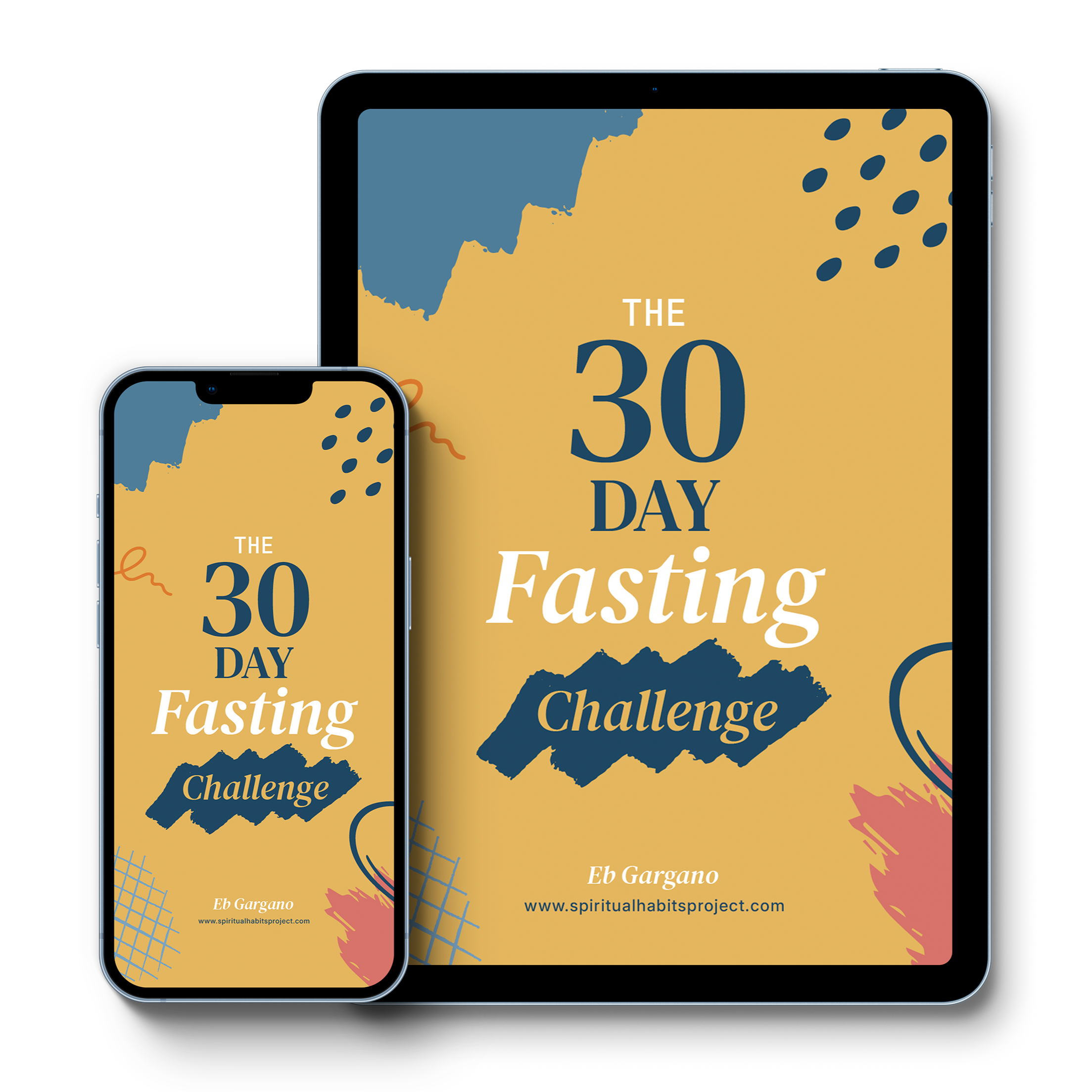
Your next step: The 30 Day Fasting Challenge
If you want help building a consistent fasting habit, I invite you to join the 30 Day Fasting Challenge.
Each day includes:
- A short Scripture passage to read
- A brief teaching on the passage
- A guided prayer activity
- A short fasting-related challenge to do at another point in the day
- Reflection questions to help you track your growth
Over the course of 30 days, you’ll grow in your knowledge and understanding of Biblical fasting, and you’ll begin to build a foundation for a regular habit of fasting.
Join the 30 Day Fasting Challenge!
Recommended books on fasting
- God’s Chosen Fast – Arthur Wallis
- A Hunger for God – John Piper
- The Daniel Fast – Susan Gregory
READ MORE >>> Recommended books on fasting
Pin this article
Scripture copyright and permissions
For information about the Bible translations used on this website and their copyright notices, please see the Scripture copyright and permissions page.