
Fasting is mentioned all throughout the Bible and yet fasting seems to have been relegated to the sidelines among many Christians around the world.
Today fasting is often seen as something that is only for the extra devout, not something for normal ordinary Christians. And yet, that is not at all how the Bible portrays fasting.
In this guide to Christian fasting, we’ll explore what fasting is, why it matters and how to incorporate this ancient, yet powerful, discipline into your everyday life.

This article contains affiliate links. This means if you click on a link and make a purchase, I may get a commission, but you will not be charged a penny more. Thanks for your support!
What is Christian fasting?
At its core, Christian fasting is simply going without something – usually food – for a period of time.
All throughout Scripture, we see examples of fasting:
Jesus fasted for 40 days before starting his earthly ministry (Matthew 4:1–2)
Esther called for a 3 day fast before asking the king to save her people (Esther 4:16)
Moses fasted for 40 days while on Mount Sinai (Exodus 34:28)
Paul fasted for 3 days following his conversion on the road to Damascus (Acts 9:9)
Elijah fasted for 40 days while traveling to Mount Horeb (1 Kings 19:8)
And Christians still fast today.
Some Christians choose to fast all food for 24 or 48 hours, others choose to do a partial food fast for a period of time, while others choose to fast from things other than food, such as TV, social media, sport or a favourite hobby. And many Christians around the world choose to give up a favourite treat for Lent each year.
READ MORE >>> What are the different types of Christian fast?
Why do Christians fast?
There are many good reasons for Christians to fast. Here are 3 of them:
1. Jesus modelled it
As Christians, we all want to be more Christlike – being Christlike involves living like Christ and doing the things he did.
At the start of his ministry Jesus fasted for 40 days and 40 nights in the wilderness (Matthew 4:1–2)
If Jesus fasted, this rather suggests we should do so too!
2. Jesus expected it
As we have seen already, there are many biblical examples of fasting. But it can be easy to see these examples and think: “Oh well, that was an Old Testament thing.” or “That was only for special people like Moses.”
But the Bible makes it very clear that Jesus expected us to fast.
In Jesus’ famous Sermon on the Mount, he says:
“When you fast, do not look sombre as the hypocrites do, for they disfigure their faces to show others they are fasting. Truly I tell you, they have received their reward in full. But when you fast, put oil on your head and wash your face, so that it will not be obvious to others that you are fasting, but only to your Father, who is unseen; and your Father, who sees what is done in secret, will reward you.” – Matthew 6:16-18 (NIV)
Notice Jesus says “when you fast” not “if you fast”.
3. The early church fasted
The early church clearly saw fasting as important and there are several examples of fasting in the New Testament:
- Paul fasted for 3 days after his conversion on the road to Damascus (Acts 9:9)
- The church at Antioch fasted and prayed before sending out Paul and Barnabas (Acts 13:2-3)
- Paul and Barnabas used prayer and fasting when appointing elders for new churches (Acts 14:23)
- The apostle Paul mentioned fasting often as part of his ministry life (2 Corinthians 6:5 & 2 Corinthians 11:27)
READ MORE >>> Should Christians fast?
What is the purpose of fasting?
It is clear from the words and example of Jesus, as well as the example of the early church, that Christians should fast. But what exactly is the purpose of Christian fasting?
To strengthen prayer
Fasting is often paired with prayer in the Bible in order to strengthen those prayers. We see many examples of this all throughout the bible. For example: Esther, David and Nehemiah all fasted when they prayed.
To seek direction
Fasting is often used in the Bible when seeking God’s direction. For example, the church at Antioch fasted and prayed before sending out Paul and Barnabas (Acts 13:2–3). And later Paul and Barnabas used prayer and fasting when appointing elders for new churches (Acts 14:23).
To accompany repentance
We also see fasting as a sign of repentance and humility. For example, when Jonah preached judgment against Nineveh, the entire city fasted as a sign of deep repentance (Jonah 3:5–10). Likewise David fasted as part of his repentance after the prophet Nathan confronted him about his sin with Bathsheba (2 Samuel 12:16).
To prepare for ministry
Christians also often fast in order to prepare for ministry, following Jesus’ example when he fasted for 40 days and 40 nights to prepare for his earthly ministry (Matthew 4:1–2).
To express love and devotion
Many Christians also fast as a way of expressing love and devotion – a way of showing that God is more important than earthly pleasures, and as a reminder that we depend on God for our every need. (Matthew 4: 4 & Deuteronomy 8:3)
READ MORE >>> Should Christians fast?
Different types of Christian fast
There are lots of different types of Chrisian fast. Here are some of the most common ones…
Full fast: This is where Christians fast all food, but do drink water and sometimes other drinks as well. Many Christians will fast all food for a day or two. Occasionally Christians fast all food for longer periods.
Partial Fast: This is where Christians fast only certain foods and/or drinks. For example, a Christian might give up a favourite food or drink for a period of time, as a fast.
Daniel Fast: This is based on the type of fast modelled by the prophet Daniel in the book of Daniel (Daniel 1:8-16 & 10:2–3). It is a type of partial fast, often lasting 10 or 21 days, and typically consists of eating only vegetables and drinking only water.
Lent Fast: Many Christians (especially Catholics, Orthodox Christians and Anglicans) give up certain foods during the 40 days of Lent leading up to Easter. Often Christians give up something they normally really enjoy, such as chocolate, coffee or alcohol.
Non-Food Fasts: Some Christians choose to fast from something other than food for a period of time. For example, they may fast social media, TV or sport, in order to spend more time praying and reading the Bible.
READ MORE >>> What are the different types of Christian fast?
Fasting as a spiritual discipline
Fasting is considered a spiritual discipline because it requires intention and consistency.
Spiritual growth isn’t about random bursts of devotion or occasional spiritual highs. It’s about building consistent rhythms that shape your heart over time.
Just as exercise strengthens the body, spiritual disciplines strengthen our relationship with God.
Fasting sits alongside the other spiritual disciplines – like reading the Bible, prayer, fellowship, service and evangelism – each one helping us remain rooted in God and formed into the likeness of Christ.
READ MORE >>> What are the spiritual disciplines?
How to start fasting
Christian fasting doesn’t have to be complicated or overwhelming. Here are some practical steps to get started:
1. Start small
I strongly recommend you DO NOT begin with a long and difficult fast. If you decide for your first fast you will fast all food for 40 days you will almost certainly fail!
Instead I recommend you begin fasting with something small and achievable. That could be:
- Fasting one meal
- A partial fast for one day
- Fasting social media and/or TV for one day
Once you have successfully achieved a smaller fast, you can attempt something harder – such as fasting two meals or a partial fast / non-food fast for two days.
2. Get medical advice
If you are at all unsure whether or not you should attempt a food fast – especially a full fast, please consult your doctor.
If your doctor advises you against a full fast, you may still be able to do a partial fast – even if that is just fasting one food or drink, such as chocolate or alcohol.
And if your doctor advises you against any kind of food-based fast, you can still do a non-food fast, such as fasting social media, TV, sport or your favourite hobby.
3. Replace food with God
Do not simply go without food (or whatever non-food thing you’ve decided to fast).
A fast is not just about giving something up, it’s also about “feasting” on God. So, when you fast, be sure to make extra room for God.
For example, if you are missing a meal, use the time you would’ve been spent eating to read the Bible and pray. And if you are fasting social media, spend the time you would’ve been scrolling with God instead.
I also recommend that, every time you feel hungry, you use that as a “prompt” to pray.
4. Keep a journal
It’s a good idea to keep a journal to jot down any thoughts, insights, observations and words from God you receive during your fast.
Many Christians find that during periods of fasting they feel especially close to God and hear from him more than usual.
Keeping a journal also allows you to look back and see how God has been at work.
5. Make fasting a regular part of your walk with God
We have seen that fasting was expected by Jesus, and modelled by Jesus and the early church.
For this reason we as Christians should aim to make fasting part of a regular part of our walk with God. But this will not happen unless we make a specific effort to “plan in” fasting and discipline ourselves to do it regularly.
I recommend making a plan for how you will ensure fasting becomes a regular part of your life.
One simple way to do this is to plan to fast once a month – starting small and gradually building up. For example, if you choose to do a full fast, you could start with 1 meal and build up to 24 or even 48 hours.
6. Don’t turn it into legalism
However, don’t go too far the other way and turn fasting into legalism. Fasting should never be about crossing a task off the to do list.
Above all, fasting is about showing our love and devotion to God. Just like prayer and reading the Bible we should fast out of love for God and a desire to draw closer to him, not to earn his favour or prove our spirituality.
7. Don’t wear fasting as a badge of “holiness“
Jesus specifically warned us against showing off about our fasting in Matthew 6:16–18.
Of course, depending on your situation, you may have to tell one or two people that you are fasting – for example your family, or if someone invites you to dinner. But as far as is possible and sensible, aim to keep your fast as a secret between you and God.
8. Focus on consistency, not perfection
Sometimes fasting will feel amazing – like you are super close to God and learning lots from your experience.
Other times it will feel incredibly hard and miserable. And sometimes you will fail altogether.
Keep showing up anyway. Faithfulness over time is what shapes us.
READ MORE >>> How to fast: a step by step guide for Christians
Final thoughts
We see throughout Scripture that God’s people are people who fast.
Jesus himself modelled fasting and expected that Christians would follow his example.
We also see examples of fasting in the early church.
Christians today can – and should – fast.
We can fast to strengthen our prayer life, seek guidance, express repentance and show our love and devotion to God.
But a regular habit of fasting will not happen unless we plan it into our lives and discipline ourselves to carry out our plan.
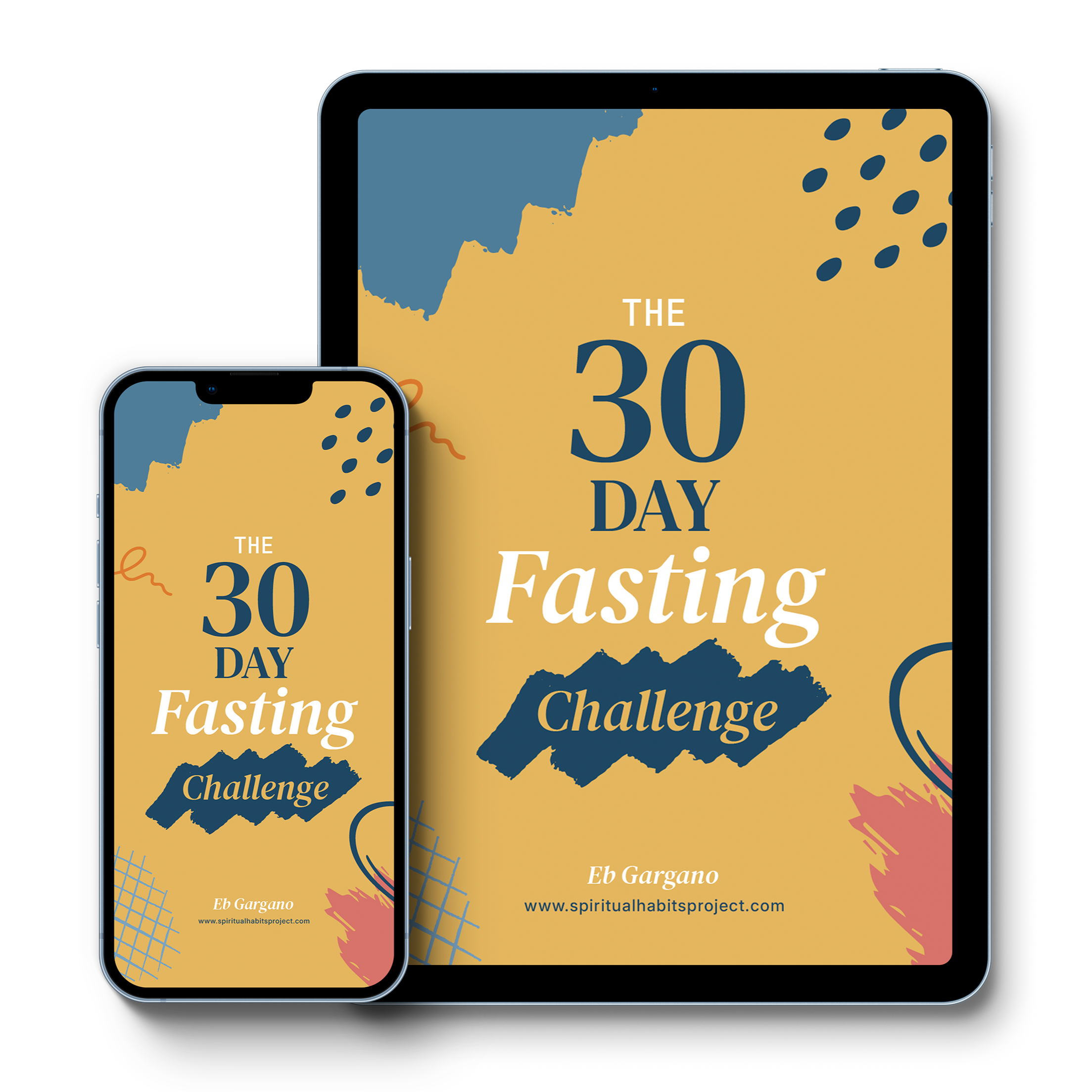
Your next step: The 30-Day Fasting Challenge
If you want help building a consistent fasting habit, I invite you to join the 30 Day Fasting Challenge.
Each day includes:
- A short Scripture passage to read
- A brief teaching on the passage
- A guided prayer activity
- A short fasting-related challenge to do at another point in the day
- Reflection questions to help you track your growth
Over the course of 30 days, you’ll grow in your knowledge and understanding of Biblical fasting, and you’ll begin to build a foundation for a regular habit of fasting.
Join the 30 Day Fasting Challenge!
Recommended books on fasting
- God’s Chosen Fast – Arthur Wallis
- A Hunger for God – John Piper
- The Daniel Fast – Susan Gregory
READ MORE >>> Recommended books on fasting
Pin this article
Scripture copyright and permissions
For information about the Bible translations used on this website and their copyright notices, please see the Scripture copyright and permissions page.