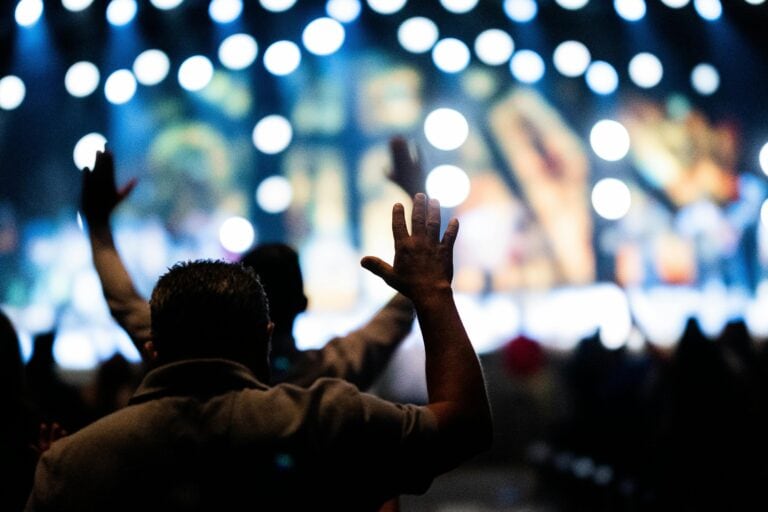
Romans 12 makes it clear that worship is so much more than singing:
“Therefore, I urge you, brothers and sisters, in view of God’s mercy, to offer your bodies as a living sacrifice, holy and pleasing to God – this is your true and proper worship. Do not conform to the pattern of this world, but be transformed by the renewing of your mind. Then you will be able to test and approve what God’s will is – his good, pleasing and perfect will.” – Romans 12:1-2 (NIV)
We are called to worship God with our whole lives.
But if worship is so much more than singing on a Sunday…
…then the obvious question is:
How do we actually worship God in everyday life?
The good news is that the Bible doesn’t leave us guessing.
In this article, we’ll explore what Scripture teaches us about how to worship God with our whole lives…

This article contains affiliate links. This means if you click on a link and make a purchase, I may get a commission, but you will not be charged a penny more. Thanks for your support!
Love God
Everything starts here.
We cannot worship God if we don’t love God.
Jesus clearly stated that the greatest commandment is:
“Love the Lord your God with all your heart and with all your soul and with all your mind.” – Matthew 22:37, NIV
Worship flows out of love for God.
God deeply loves us – so much so that he sent his Son to die for us – and he longs for us to love him back.
You cannot worship God if he is not Lord of your life, if you have not given your life to him and if you do not love him above all other things.
In other words:
You cannot worship God if you are not a Christian.
(Not sure whether you’re a Christian or not? Head here >>> What is the Gospel Message?)
Obey God
But it’s not enough to merely be a Christian or say we love God above all other things. That is not worship.
Love for God is always expressed by obedience.
“If you love me, obey my commandments” – John 14:15 (NLT)
And consider what it says in Romans, one of the most important teachings on worship:
“Therefore, I urge you, brothers and sisters, in view of God’s mercy, to offer your bodies as a living sacrifice, holy and pleasing to God – this is your true and proper worship. Do not conform to the pattern of this world, but be transformed by the renewing of your mind. Then you will be able to test and approve what God’s will is – his good, pleasing and perfect will.” – Romans 12:1-2 (NIV)
True worship is about offering our whole bodies – everything we do, think and say – to God as a “living sacrifice”.
True worship is about living in obedience to God in all aspects of our lives.
But how do we know what God wants?
God has revealed what he wants us to do in Scripture.
If we want to obey God, if we want to truly worship God, we need to read Scripture carefully and apply it to our lives diligently.
Make reading the Bible and putting it into practice a priority in your life, for if you don’t you are not truly worshipping God. And no amount of singing will make up for that!
READ MORE >>> How to read the Bible
Surrender to God
But worship is not just “doing what it says in the Bible”. It goes deeper than that.
At its deepest level, worship is surrender.
In Matthew’s Gospel Jesus says:
“Whoever wants to be my disciple must deny themselves and take up their cross and follow me.” – Matthew 16:24 (NIV)
And in Proverbs it says:
“Trust in the Lord with all your heart and lean not on your own understanding; in all your ways submit to him, and he will make your paths straight.” – Proverbs 3:5-6 (NIV)
Surrender means saying “yes” to whatever God asks you to do and wherever God asks you to go.
Surrender means not doing things God tells you not to do – even if you don’t quite understand why he is saying “no”.
Surrender is waiting when God tells you to wait.
And surrender means trusting God – even when his plans are inconvenient, painful or seem downright impossible.
One of the greatest examples of this is Mary, the mother of Jesus, when she was told she would give birth to the Messiah – something that would most definitely be inconvenient and would almost certainly lead to her being shunned by her community, because she appeared to be pregnant outside marriage. And something that, to Mary in that moment, seemed completely impossible.
And she replied simply:
“I am the Lord’s servant… May your word to me be fulfilled.” – Luke 1:38 (NIV)
That level of surrender is true worship.
Live justly
Worship also shapes how we treat the world around us.
God consistently links true worship with justice, mercy and compassion.
In fact, some of the most shocking passages about worship in the Bible talk about the relationship between worship and social justice:
“With what shall I come before the Lord and bow down before the exalted God? Shall I come before him with burnt offerings, with calves a year old? He has shown you, O mortal, what is good. And what does the Lord require of you? To act justly and to love mercy and to walk humbly with your God.” – Micah 6:6&8 (NIV)
“Away with the noise of your songs! I will not listen to the music of your harps. But let justice roll on like a river, righteousness like a never-failing stream!” – Amos 5:23-24 (NIV)
And there are LOTS of similar passages in the Bible. For example: 1 Samuel 15:22, Isaiah 1:11-17 and Isaiah 58:3-7.
Even a cursory glance at these passages tells us that we cannot separate worship from how we treat people.
Especially the vulnerable, overlooked and forgotten.
Jesus brings up this topic in his famous parable about the goats and the sheep:
“Truly I tell you, whatever you did for one of the least of these brothers and sisters of mine, you did for me.” – Matthew 25:40 (NIV)
True worship is inextricably linked with social justice.
Praise and thank God
Of course, worship also involves praising God for who he is and thanking God for what he has done. And that most definitely includes singing!
Scripture is full of this:
“Give thanks to the Lord, for he is good; his love endures for ever.” – Psalm 107:1 (NIV)
“Sing the praises of the Lord, enthroned in Zion; proclaim among the nations what he has done.” – Psalm 9:11 (NIV)
“Sing praises to God, sing praises; sing praises to our King, sing praises.” – Psalm 47:6 (NIV)
A life of worship is a life that is full of praise, gratitude and sung worship!
When our hearts overflow with who God is, praise naturally follows.
We must be careful not to LIMIT worship to singing…
But the Bible seems pretty emphatic that our worship should INCLUDE singing!
Do everything as worship
There is a common misconception among Christians that we are only worshipping God when we are doing “spiritual things”, such as reading the Bible, praying, going to Church and singing worship songs.
But this is not at all what the Bible says!
Paul says:
“So whether you eat or drink or whatever you do, do it all for the glory of God.”– 1 Corinthians 10:31 (NIV)
And The Message puts Romans 12:1 like this:
“So here’s what I want you to do, God helping you: Take your everyday, ordinary life—your sleeping, eating, going-to-work, and walking-around life—and place it before God as an offering.” – Romans 12:1 (MSG)
How can we do this? How is it possible to worship God with every activity we do?
Colossians gives us the answer:
“Whatever you do, work at it with all your heart, as working for the Lord, not for human masters.” – Colossians 3:23 (NIV)
Worship should not be a part of our lives, it should be our whole lives. Everything we do should be done as worship to God.
Final thoughts
So how do we worship God?
The Bible is clear: we worship God by offering our whole lives to him.
And how do we do that? By:
- loving God deeply
- obeying him daily
- surrendering control
- living justly
- praising him continually
- doing everything as worship
Worship is not a moment in our week.
It is everything we do.
Recommended books on worship
- The Air I Breathe – Louie Giglio
- Facedown – Matt Redman
- Why Worship? – Tim Hughes, Nick Drake et al.
- True Worship – Vaughn Roberts
- The Purpose Driven Life – Rick Warren
READ MORE >>> Recommended books on worship
Pin this article
Scripture copyright and permissions
For information about the Bible translations used on this website and their copyright notices, please see the Scripture copyright and permissions page.