Christian fasting is the practice of going without something – usually food – for a spiritual purpose, such as asking for guidance, strengthening prayer, seeking repentance or pursuing deeper intimacy with God.
There are many different types of Christian fast in the Bible, as well as many different types of fasts practised by Christians today.
These fasts include: absolute fasts, full fasts, partial fasts, Daniel fasts, Lent fasts and non-food fasts.
In this guide we will explore each of these different types of Christian fast: what they are, examples of each fast in the Bible and how Christians can do these types of fast today.

This article contains affiliate links. This means if you click on a link and make a purchase, I may get a commission, but you will not be charged a penny more. Thanks for your support!
1. Absolute fast (or Supernatural Fast)
The first and most extreme form of fasting is the “absolute” fast.
This type of fast involves abstaining from all food and drink for a period of time.
This type of fast is often called a “supernatural fast” because going without food and water for more than a day or two would, in the “natural” order of things, result in death.
This type of fast is found in the Bible in many places:
Before receiving the Ten Commandments, Moses fasted for 40 days without food or water (Exodus 34:28, Deuteronomy 9:9).
Elijah fasted for 40 days and nights on his journey to Mount Horeb (1 Kings 19:8).
Esther asked the Jews in Susa to fast from all food and drink for three days before she approached the king (Esther 4:16).
Following his conversion on the road to Damascus, Paul went without food and water for three days (Acts 9:9).
The King of Nineveh issued a decree stating that no humans or animals should eat or drink to show deep repentance (Jonah 3:7).
Ezra did not eat or drink for three days in mourning over the sins of the exiles (Ezra 10:6).
It goes without saying that an absolute fast is – under normal circumstances, at least – incredibly risky, with some serious negative health implications.
This type of fast should not usually be attempted by Christians today.
2. Full Fast (or Normal Fast)
The “full fast” or “normal fast” is where Christians fast all food, but DO drink water and sometimes other drinks as well.
Again there are several examples of this in the Bible:
Jesus’ fast in the wilderness (Matthew 4:2): The Bible says Jesus “ate nothing” for forty days, but it does not mention he abstained from water.
The early church (Acts 13:2-3): Paul and Barnabas, along with other believers, fasted and prayed before sending off missionaries. There is no mention of them fasting from liquids.
1 day fasts (Judges 20:26 & 1 Samuel 7:6): The Israelites often declared fasts where they did not eat for a day to seek guidance or repentance. Again, there is no mention of them fasting from liquids.
Paul and the shipwrecked crew (Acts 27:33-34): Before being shipwrecked, Paul and the men on the ship went fourteen days without eating food. Again, there is no mention of them also going without drinking anything.
Many Christians today still undertake “full” fasts.
This can be as short as fasting one or two meals.
However, many Christians do full fasts for longer – for example 24 hours or 48 hours.
And occasionally Christians may do a full fast for much longer: several days or even several weeks.
For most healthy people, a water-only fast for a few hours or even a few days will not cause any particular health problems. But of course, you should always seek medical advice before undertaking a full fast if you are at all unsure or concerned.
READ MORE >>> How to fast: a step by step guide for Christians
3. Partial Fast
A partial fast is a “catchall” term for any kind of food-related fast that does not involve giving up all food and drinking only water.
This could literally be anything!
Common examples include:
- Giving up alcohol
- Giving up coffee / tea / caffeine
- Giving up a specific treat food such as chocolate, crisps, cake or biscuits
- Giving up all treat food
- Giving up takeaways and/or eating out
- Going vegetarian or vegan
- Giving up one specific favourite food
Because a partial fast is so much easier than a full fast, partial fasts tend to be longer than full fasts and may last a week, 21 days, a month, 40 days… or even longer!
Because a partial fast is usually only about giving up one food, food group or drink (and often an unhealthy one!), they are usually much safer and can be undertaken by most people.
However, if you are at all unsure, you should of course consult with your doctor.
There are only really two examples of partial fasts in the Bible, both undertaken by the prophet Daniel in the book of Daniel (Daniel 1:8-16 & 10:2–3).
In fact, because of this, partial fasts are often called “Daniel” fasts.
4. Daniel Fast
A Daniel fast is a type of partial fast, based on the accounts of two partial fasts that Daniel undertook when he was in captivity in Babylon.
The first of these fasts is recorded in Daniel Chapter 1. In this account Daniel and some other Israelite men, have been chosen to serve the King of Babylon.
Daniel and his fellow Israelites do not wish to defile themselves with the royal food and wine, so they ask for permission to eat nothing but vegetables and drink nothing but water.
The second Daniel fast is recorded in Daniel Chapter 10:
“At that time I, Daniel, mourned for three weeks. I ate no choice food; no meat or wine touched my lips; and I used no lotions at all until the three weeks were over.” – Daniel 10:2-3 (NIV)
Today, many Christians carry out Daniel fasts. The exact specifics of the fast vary, but it usually involves going vegetarian or vegan, and drinking only water (some allow for fruit juice as well) for a period of 10 or 21 days.
Again, because this is only a partial fast, it is usually safe for most people, but because it is more restrictive than other partial fasts, you should still consult a doctor if you are at all concerned.
READ MORE >>> The Daniel Fast: what it is, why do it and how to do it
5. Lent Fast
Another very common type of partial fast is the Lent fast. Many Christians around the world, especially Catholics, Orthodox Christians and Anglicans, choose to give up one or more foods during the 40 days of Lent leading up to Easter.
Lent is typically a time of repentance, prayer and preparation for the celebration of Christ’s resurrection on Easter Sunday.
There are no examples of fasting for Lent in the Bible, but rather the Lenten fast is meant to partially imitate and honour Jesus’ 40 day fast in the wilderness (Matthew 4:1-11).
Typically Christians give up some kind of favourite/luxury food or drink during this time.
Popular things to give up during lent include:
- Chocolate
- Sugar
- All snacks
- Meat
- Tea, coffee or all caffeine
- Alcohol
Sometimes Christians choose to fast from something other than food during Lent. This is known as a non-food fast.
6. Non-Food Fasts
Many Christians today choose to fast something other than food/drink. This kind of fast is known as a non-food fast.
Common examples include giving up one or more of the following for a period of time:
- One or all social media platforms
- TV or a particular streaming platform
- The radio and/or podcasts
- The news
- Music (just secular music or all music)
- Your mobile phone
- All screens
- A favourite sport (playing, watching or both)
- A favourite hobby
- Makeup / grooming products
- Dating
- Sex (by agreement, between a married couple)
- Spending money (on anything but essentials)
- Sleep (usually sleep for one night, or giving up lie-ins / getting up early to pray)
A non-food fast can be as short as a few hours or it can last several days, weeks or even months.
Often the aim of a non-food fast is to create extra time to spend with God in prayer and reading his Word.
But a non-food fast can also be used to “go cold turkey” on something which is leading to temptation/sin, becoming addictive or becoming a “god” in someone’s life.
There are a few examples of non-food fasts in the Bible:
Sexual abstinence: In Exodus 19:15, the Israelites abstained from sexual relations to in order to prepare to encounter God at Mount Sinai. Similarly, 1 Corinthians 7:5 describes couples mutually agreeing abstain from sexual relations for a set time to dedicate themselves to prayer and fasting.
Abstaining from grooming: Daniel 10:3 states that, as well as eating no choice food, meat or wine for three weeks, Daniel also “used no lotions”. This points to a fast from grooming products, not just food.
Sleep fasts (AKA vigils): Jesus fasted sleep before choosing his disciples in Luke 6:12 and later he asked his disciples to stay awake and pray in Gethsemane (Matthew 26:40).
Because a non-food fast does not involve giving up food or drink, they are usually safe and can be a good option for people who cannot do a food fast due to health reasons.
Final thoughts
There are many types of Christian fast, including absolute fasts, full fasts, partial fasts, Daniel fasts, Lent fasts and non-food fasts.
Some of these are directly based on specific fasts recorded in the Bible, while others are more modern inventions which seek to bring the benefit of fasting to other areas of life.
Fasting can be very beneficial: creating more time for God, deepening faith and strengthening prayer. However, some types of fasts can potentially be dangerous and should not be undertaken lightly.
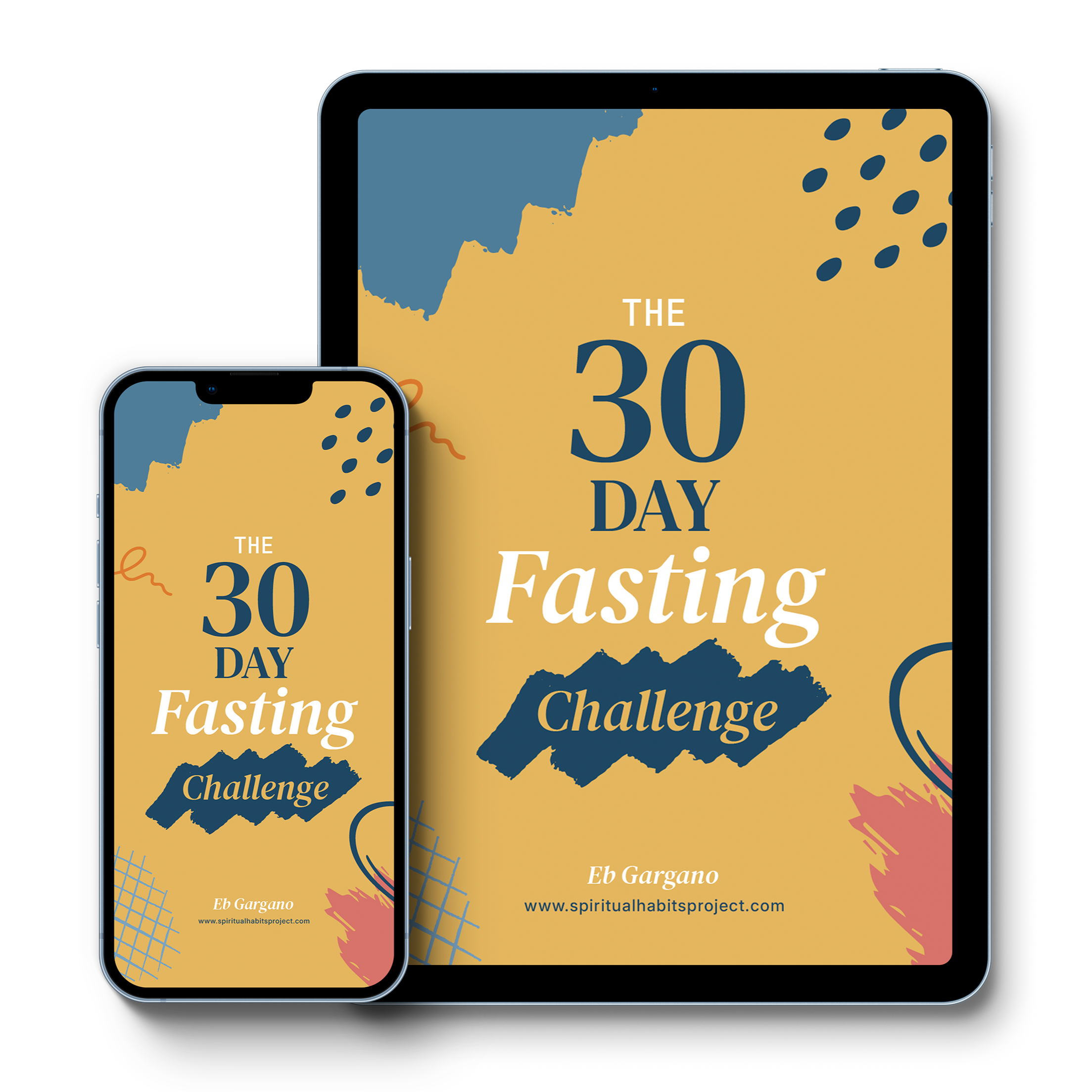
Your next step: The 30-Day Fasting Challenge
If you want help building a consistent fasting habit, I invite you to join the 30 Day Fasting Challenge.
Each day includes:
- A short Scripture passage to read
- A brief teaching on the passage
- A guided prayer activity
- A short fasting-related challenge to do at another point in the day
- Reflection questions to help you track your growth
Over the course of 30 days, you’ll grow in your knowledge and understanding of Biblical fasting, and you’ll begin to build a foundation for a regular habit of fasting.
Join the 30 Day Fasting Challenge!
Recommended books on fasting
- God’s Chosen Fast – Arthur Wallis
- A Hunger for God – John Piper
- The Daniel Fast – Susan Gregory
READ MORE >>> Recommended books on fasting
Pin this article
Scripture copyright and permissions
For information about the Bible translations used on this website and their copyright notices, please see the Scripture copyright and permissions page.