Is there a right time to pray?
Morning?
Evening?
Before meals?
Before bed?
The short answer is: we can pray at anytime, anywhere.
Paul tells us to:
“Pray without ceasing.” – 1 Thessalonians 5:17 (ESV)
Prayer isn’t restricted to a location or a schedule. You can pray while walking, working, cooking, commuting, or lying awake at night.
God is not bound by time zones or office hours.
And yet…
While there is no wrong time to pray, there are huge benefits to choosing one specific time each day when you make a specific commitment to pray.

This article contains affiliate links. This means if you click on a link and make a purchase, I may get a commission, but you will not be charged a penny more. Thanks for your support!
If you’re new to the topic of prayer, you may want to begin with my complete overview of the spiritual discipline of prayer. But here, we’re going to go deeper into the practical question of when is the best time to pray.
We can pray anytime – and we should
Scripture gives us examples of prayer happening at many different times of day.
David writes:
“Evening, morning and noon I cry out in distress, and he hears my voice.” – Psalm 55:17 (NIV)
Daniel prayed three times a day (Daniel 6:10).
Jesus prayed before major decisions (Luke 6:12), before meals (Matthew 14:19), in moments of grief (John 11:35–41) and in moments of anguish (Matthew 26:36–44).
Prayer is not confined to one specific moment each day.
The more we develop a habit of prayer, the more it becomes a natural reflex throughout the day.
But habits don’t form by accident…
The power of a consistent prayer time
There is tremendous power in choosing one specific time each day for prayer.
A non-negotiable anchor point.
Without that anchor, prayer often becomes “whenever I get around to it” – which in our busy modern lives can easily become “only when I feel like it” or even “only in emergencies”.
Choosing one specific time to pray each day builds our relationship with God. Over time, that consistency creates a habit… and when we have that regular habit of prayer and that close relationship with God, prayer becomes a reflex.
Jesus himself modelled this for us…
“Very early in the morning, while it was still dark, Jesus got up, left the house and went off to a solitary place, where he prayed.” – Mark 1:35 (NIV)
Notice 3 key details:
- Early in the morning
- A solitary place
- Intentional time in prayer
If Jesus prioritised regular, intentional time alone in prayer with the Father, how much more should we?
Why I recommend praying first thing in the morning
While you can pray at any time, I highly recommend making your “one specific time” as soon as possible after you wake up.
Why?
Because what you begin your day with sets the tone for the rest of your day.
If you begin your days with…
- Social media
- The news
- Emails
- Messages
- Notifications
… that sets the tone for your entire day.
Which typically leads to comparison, anxiety, stress and distraction.
But if you begin the day with prayer – perhaps as part of a daily quiet time – that sets an entirely different tone.
David writes:
“In the morning, Lord, you hear my voice; in the morning I lay my requests before you and wait expectantly.” – Psalm 5:3 (NIV)
Morning prayer:
- Changes your perspective on the day ahead
- Helps you focus on God’s agenda rather than your own
- Aligns your heart to God’s will
- Grounds you in peace rather than anxiety
Paul writes:
“Do not be anxious about anything, but in every situation, by prayer and petition, with thanksgiving, present your requests to God. And the peace of God, which transcends all understanding, will guard your hearts and your minds in Christ Jesus.” – Philippians 4:6–7 (NIV)
Imagine beginning your day guarded by peace rather than anxious, stressed and distracted.
Who wouldn’t want that?
“But I’m not a morning person…”
You might be thinking: “That sounds lovely, but I am absolutely not a morning person.”
That’s okay.
This isn’t about waking at 4am or praying for three hours before sunrise.
It’s about finding 5–10 minutes as early as possible after you wake up.
Just five intentional minutes.
Try it for one week.
Before checking your phone…
Before opening email…
Before scrolling…
Give God the first five minutes.
See what difference it makes.
(And you may well find that, before long, five minutes becomes 10… and then 15…)
Habit first – reflex later
The goal is not to confine prayer to one short morning slot.
The goal is to build such a steady habit that prayer becomes woven through your whole day.
Paul writes:
“Pray continually.” – 1 Thessalonians 5:17 (NIV)
This doesn’t mean speaking nonstop words all day. It means living your life with an open line of communication – turning to God throughout the ordinary moments of life.
When you have a regular, consistent prayer time each morning, it starts to have an effect on the whole of the rest of your day.
You’re more likely to:
- Whisper a quick prayer before a difficult conversation
- Thank God in a joyful moment
- Ask for wisdom in a decision
- Turn to Him when anxiety rises
Morning prayer is the anchor.
But a life of prayer becomes the fruit.
What about other times of day?
In some seasons of life – shift work, young children, health challenges – mornings may not be realistic.
If that’s true for you, choose another consistent anchor point:
- Straight after you’ve dropped the kids off at school
- During the first nap time
- During your morning coffee break
- On your commute to work or college
- Right before your shift starts, if you work nights
Picking a consistent time you will actually stick to is much more important than the time on the clock.
But try to make your time as early as possible in the day – even if your “day” starts at a very different time to most people!
Because how you begin your day shapes the whole of the rest of the day.
How to structure your morning prayer times
If you’re unsure what to say in your morning prayer times, the A.C.T.S. model of prayer is a helpful framework.
A.C.T.S. represents four types of prayer we see woven throughout the whole of Scripture:
- Adoration – Praising God for who He is
- Confession – Acknowledging our sins and asking for forgiveness
- Thanksgiving – Thanking God for what He has done
- Supplication – Bringing our requests to God, for ourselves and others
The A.C.T.S. prayer model provides a simple, balanced, biblical structure to your prayers that starts with God and his agenda before you move onto presenting your requests to him.
READ MORE >>> What is the A.C.T.S. model of prayer?
Final thoughts
There is no right or wrong time to pray.
God hears you at midnight and at midday.
But there is something powerful about giving him the first part of your day.
Morning prayer:
- Changes your perspective
- Re-aligns your priorities to focus on God’s agenda, not your agenda
- Gives you peace, hope and joy for the day ahead
Even five minutes makes a difference.
Ready to build a consistent prayer habit?
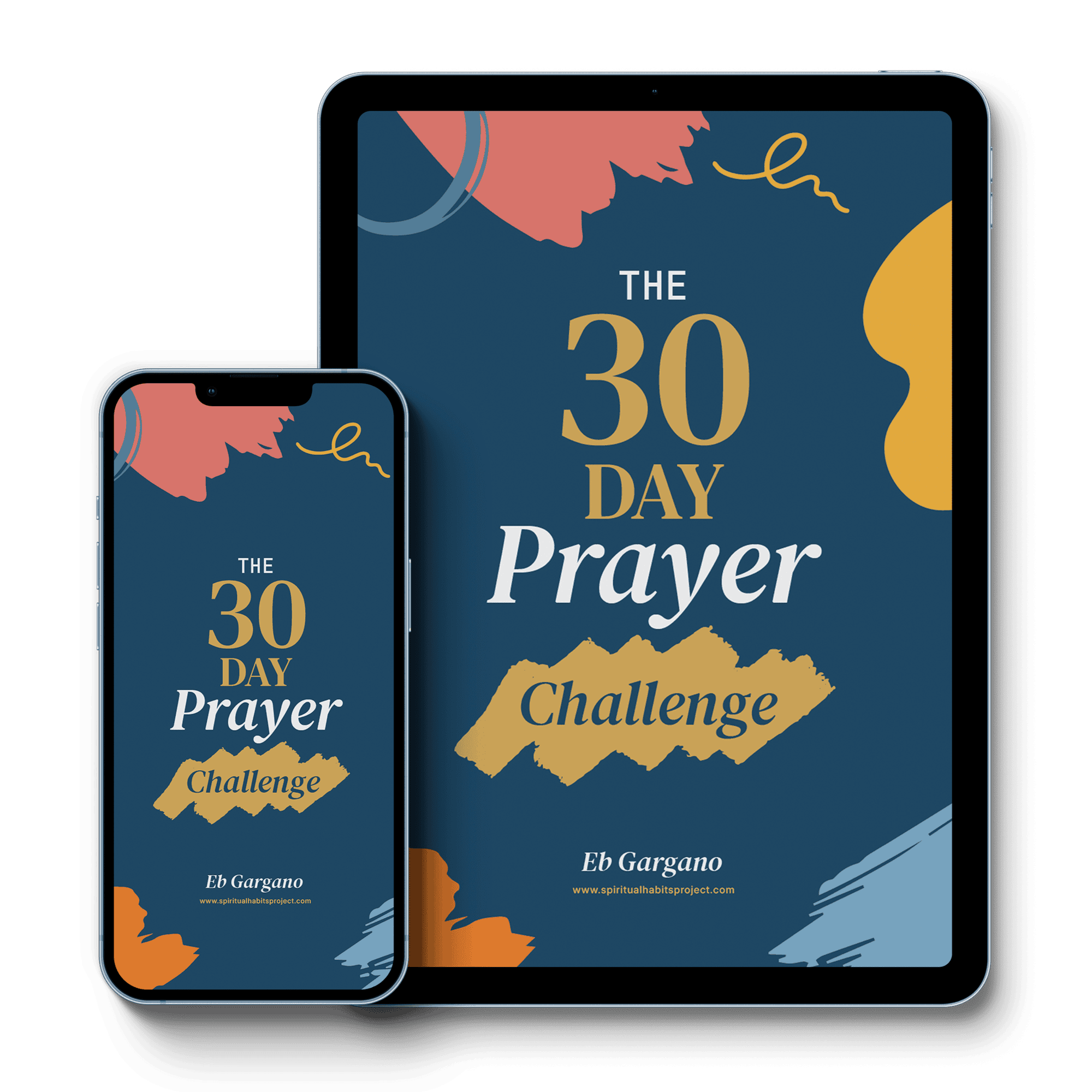
If you want help building a consistent prayer habit, I invite you to join the 30 Day Prayer Challenge.
Each day includes:
- A short Scripture passage to read
- A brief teaching on the passage
- A guided prayer activity
- A short prayer-related challenge to do at another point in the day
- Reflection questions to help you track your growth
In just 30 days, you’ll begin to build a foundation for a steady, sustainable prayer life.
Join the 30 Day Prayer Challenge
Recommended books on prayer
- How to Pray: A Simple Guide for Normal People – Pete Greig
- Praying Like Monks, Living Like Fools – Tyler Staton
- Prayer: Experiencing Awe and Intimacy with God – Timothy Keller
READ MORE >>> Recommended books on prayer
Pin this article

Scripture copyright and permissions
For information about the Bible translations used on this website and their copyright notices, please see the Scripture copyright and permissions page.