Prayer is one of the most foundational spiritual habits. It sits at the heart of the Christian life – and yet for many Christians, it is also one of the hardest to practise consistently.
In this guide, we’ll explore what prayer is, why it matters and how you can begin building a consistent rhythm of prayer in your everyday life.
This article contains affiliate links. This means if you click on a link and make a purchase, I may get a commission, but you will not be charged a penny more. Thanks for your support!
What is prayer?
At its core, prayer is simply talking with God. It’s how we speak to God, listen to him and gradually align our hearts with his will.
But prayer is so much more than a routine or a set of words. Prayer is relationship.
Throughout Scripture, prayer is presented as conversation with a personal, loving God. Jesus teaches His followers to pray to “Our Father”, reminding us that prayer is rooted in a relationship of intimacy and trust.
READ MORE >>> What is prayer?
Why pray?
There are so many good reasons to pray! Here are 5 of them:
1. Because the Bible tells us to
Prayer isn’t an optional extra for especially keen Christians.
Prayer woven throughout Scripture.
From Genesis to Revelation, God’s people pray – and are instructed to pray.
Paul writes:
“Rejoice always, pray continually, give thanks in all circumstances; for this is God’s will for you in Christ Jesus.” – 1 Thessalonians 5:16-18 (NIV)
And again:
“Devote yourselves to prayer, being watchful and thankful.” – Colossians 4:2 (NIV)
Throughout the Bible, prayer is presented as a normal, expected part of life with God.
And Jesus himself modelled this rhythm. Luke tells us:
“But Jesus often withdrew to lonely places and prayed.” – Luke 5:16 (NIV)
If Jesus prayed regularly, how much more do we need to?
2. Because we get to participate in God’s work
This is one of the great mysteries of prayer.
God is sovereign. He is not limited. He does not need us.
And yet we see that – all throughout Scripture – he chooses to work through the prayers of his people:
When the early church prayed for Peter in prison, God sent an angel to release him. (Acts 12:5–11)
When Hannah cried out in her distress, God gave her Samuel. (1 Samuel 1)
When King Hezekiah was ill, he prayed – and God granted him fifteen more years. (2 Kings 20:1–6)
When Moses interceded for Israel after the golden calf incident, God relented from destroying them. (Exodus 32:11–14)
Again and again, we see this pattern: God acts in response to prayer.
Not because we control him.
Not because God is some kind of genie in a bottle.
But because in his wisdom, he has chosen to work through the prayers of his people.
Through all this we should see something rather marvellous…
Prayer is not a duty… It is a privilege!
The Creator of the Universe invites YOU to participate in HIS work.
That should fill us with awe… and inspire us to pray more – much more!
3. Because prayer draws us closer to God
The more time we spend with someone, the deeper our relationship with that person becomes. And the same is true with God.
James writes:
“Come near to God and he will come near to you.” – James 4:8 (NIV)
Through prayer we learn to recognise his voice, trust his character and rest in his care. We begin to notice his presence in everyday life.
Closeness with God doesn’t happen accidentally. It grows through time spent with him in prayer.
4. Because prayer changes our perspective
Sometimes nothing outward changes when we pray.
But something inward does.
The Psalms show this again and again.
In Psalm 13, David begins in anguish:
“How long, Lord? Will you forget me forever? How long will you hide your face from me?” – Psalm 13:1 (NIV)
Yet by the end, he declares:
“But I trust in your unfailing love; my heart rejoices in your salvation. I will sing the Lord’s praise, for he has been good to me.” – Psalm 13:5-6 (NIV)
His circumstances haven’t shifted. His enemies are still there.
But his perspective has changed.
Prayer lifts our eyes.
5. Because prayer changes us
Over time, consistent prayer shapes our character.
Paul writes:
“Do not be anxious about anything, but in every situation, by prayer and petition, with thanksgiving, present your requests to God. And the peace of God, which transcends all understanding, will guard your hearts and your minds in Christ Jesus.” – Philippians 4:6–7 (NIV)
Prayer cultivates peace.
James adds:
“If any of you lacks wisdom, you should ask God, who gives generously to all without finding fault, and it will be given to you.” – James 1:5 (NIV)
Prayer cultivates wisdom.
Through regular conversations with God, we also grow in humility, dependence and trust.
We become less self-reliant and more reliant on God.
READ MORE >>> Why should I pray?
How to pray
There are many different models of prayer, but one of the most helpful is the A.C.T.S. model of prayer.
Throughout the Bible we see four distinct types of prayer:
Adoration – Praising God for who he is
Confession – Acknowledging our sins and asking for forgiveness
Thanksgiving – Thanking God for what he has done
Supplication – Bringing our requests to God, for ourselves and for others
We should include all four of these elements in our prayer life.
If you’re new to prayer, the A.C.T.S. model is a great place to start.
READ MORE >>> What is the A.C.T.S. model of prayer?
Prayer as a spiritual discipline
Prayer is a spiritual discipline because it requires intention and consistency.
Spiritual growth isn’t about random bursts of devotion or occasional spiritual highs. It’s about building consistent rhythms that shape your heart over time.
Just as exercise strengthens the body, spiritual disciplines strengthen our relationship with God.
Prayer sits alongside the other spiritual disciplines – like reading the Bible, fasting, fellowship, service, evangelism – each one helping us remain rooted in God and formed into the likeness of Christ.
READ MORE >>> What are spiritual disciplines?
How to start a prayer habit
Building a prayer habit doesn’t have to be complicated or overwhelming. Here are some practical steps to get started:
1. Start small
Begin with 10 minutes a day. You are much more likely to succeed if you aim for 10 minutes a day than if you aim for a much longer prayer session.
Often you will find that, you’ll really get into it and end up praying for much longer! But if you aim for a long prayer time, you’ll likely find yourself skipping your prayer time more often than not.
It is much better to pray consistently for 10 minutes every day, than have the intention of a longer prayer session that never happens!
2. Choose a consistent time
I highly recommend praying as early as possible in the morning. It sets the tone for your day and helps prevent distraction from taking over.
READ MORE >>> When is the best time to pray?
3. Keep a prayer journal
Writing your prayers helps you focus. It also allows you to look back and see how God has been at work.
Most people prefer to just jot down a few notes, but some people (like me!) love to write out their prayers in full. Do whichever feels most natural to you.
4. Start with Scripture
Prayer is sometimes described as “a conversation God started”. Beginning with even one or two verses of Scripture will help keep your prayers anchored in God’s character and will. It shifts prayer from being a shopping list of your desires to being a response to who God is and what he has done.
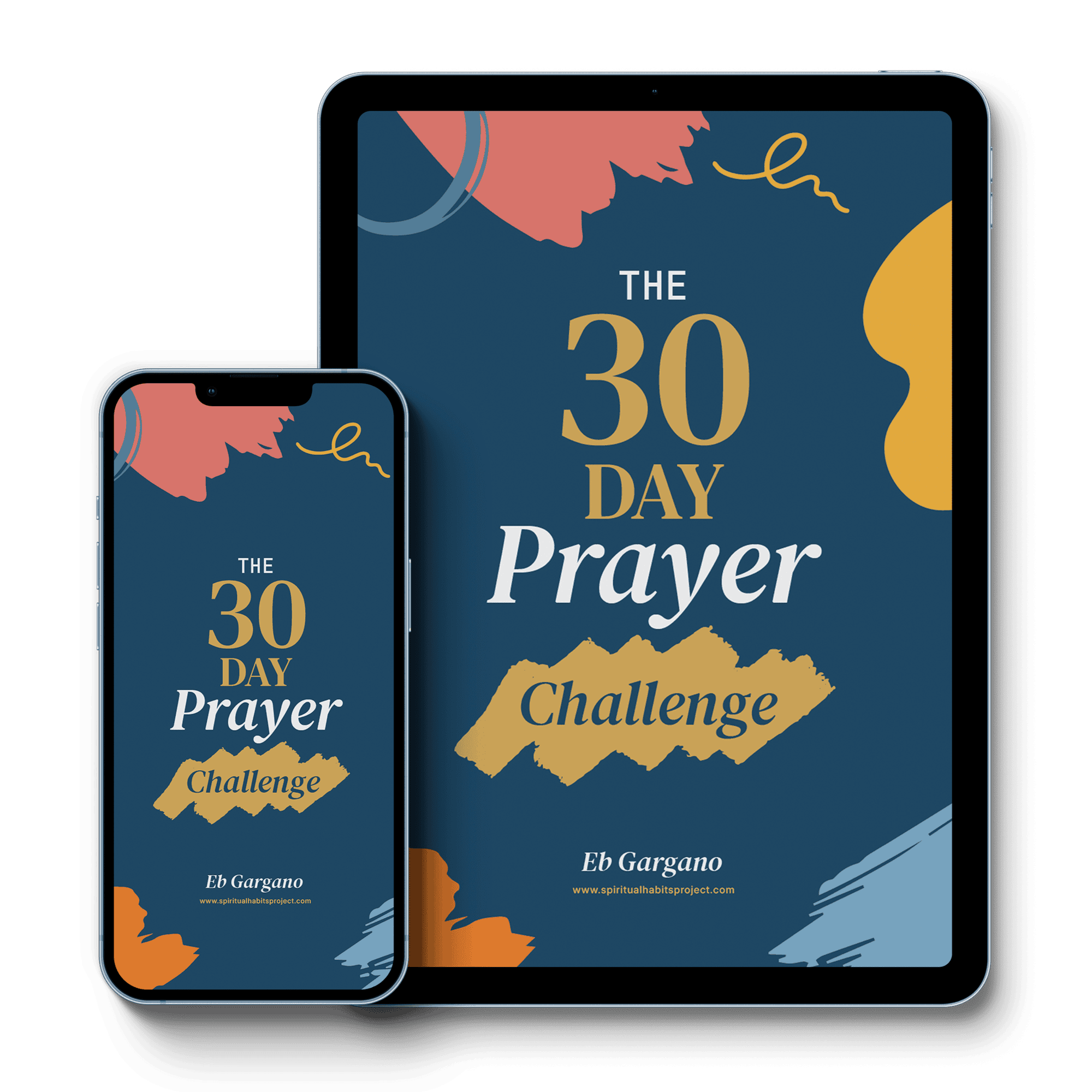
(Not sure what Scripture to use? Try the 30 Day Prayer Challenge! Each day begins with a couple of verses of Scripture to help you grow in your prayer life.)
5. Use the A.C.T.S. model
There’s no one right way to pray or “correct” model of prayer. But many Christians find the A.C.T.S. model a helpful one to keep their prayers balanced and God-focused.
A.C.T.S. stands for Adoration, Confession, Thanksgiving and Supplication. It provides a simple structure that helps you focus on God first before your own requests.
READ MORE >>> What is the A.C.T.S. model of prayer?
6. Focus on Consistency, Not Perfection
Some days will feel rich and focused. Others will feel distracted, difficult and frustrating. Keep showing up anyway. Faithfulness over time is what shapes us.
As you persevere with prayer, you will find that prayer becomes less of a task and more of a joy – a daily appointment with the King of Heaven. What could be more exciting than that?
Your Next Step: The 30 Day Prayer Challenge
If you want help building a consistent prayer habit, I invite you to join the 30 Day Prayer Challenge.
Each day includes:
- A short Scripture passage to read
- A brief teaching on the passage
- A guided prayer activity
- A short prayer-related challenge to do at another point in the day
- Reflection questions to help you track your growth
In just 30 days, you’ll begin to build a foundation for a steady, sustainable prayer life.
Join the 30-Day Prayer Challenge!
Final Thoughts
Prayer is not just an activity – it is a relationship.
Like any relationship, it deepens through intention, consistency and time.
Start small. Stay faithful. Keep showing up, even when you don’t feel like it.
“Devote yourselves to prayer, being watchful and thankful.” – Colossians 4:2 (NIV)
Recommended books on prayer
- How to Pray: A Simple Guide for Normal People – Pete Greig
- Praying Like Monks, Living Like Fools – Tyler Staton
- Prayer: Experiencing Awe and Intimacy with God – Timothy Keller
READ MORE >>> Recommended books on prayer
Pin this article
Scripture copyright and permissions
For information about the Bible translations used on this website and their copyright notices, please see the Scripture copyright and permissions page.