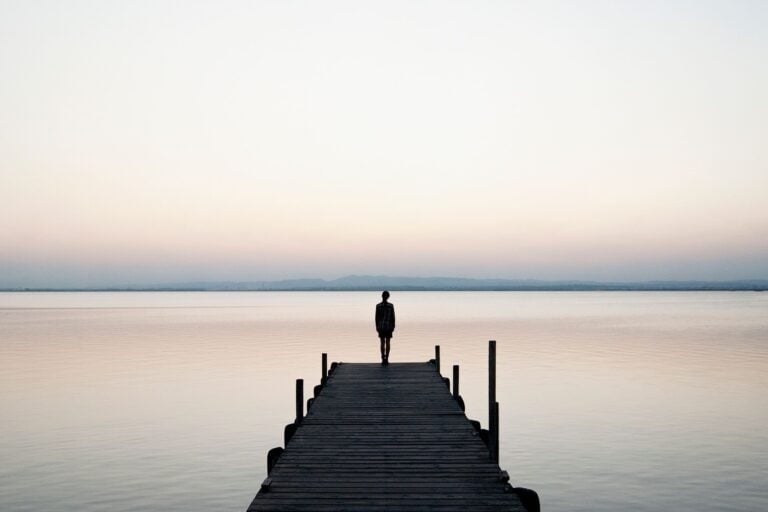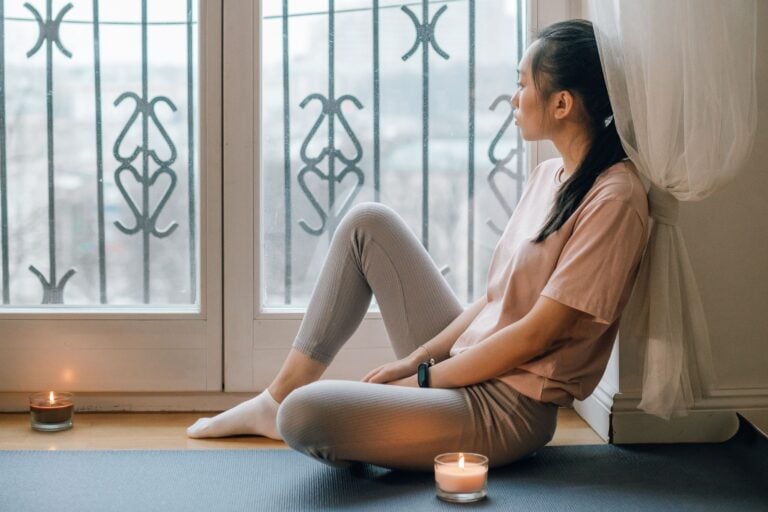
Silence and solitude are ancient spiritual disciplines that have been practised for centuries. There are many examples of them being practised in the Bible, not least by Jesus himself.
And yet, these twin disciplines have somehow fallen out of favour – at just the time when we need them most!
In this guide we will explore exactly what these two disciplines are and why we so desperately need to revive them in the 21st century.

This article contains affiliate links. This means if you click on a link and make a purchase, I may get a commission, but you will not be charged a penny more. Thanks for your support!
Two disciplines, one aim
In truth, silence and solitude are two separate disciplines:
- Silence is the intentional withdrawal from noise
- Solitude is the intentional withdrawal from people
In practice, they are deeply entwined and they both have the same aim: spending time alone with God.
It is of course technically possible to practise solitude without silence – you can for example spend time alone with God while listening to worship music.
And it is also possible to practise silence without solitude – for example on a silent retreat at a retreat centre.
However, for the most part, these two disciplines are practised together.
Sitting in the presence of God
At its most basic, the practice of silence and solitude is simply sitting quietly in the presence of God. To do, what God calls us to do the Psalms and:
“Be still, and know that I am God” – Psalm 46:10a (NIV)
In general, in the 21st century, we are not at ease with silence.
Even when we spend time alone with God, we feel the need to fill the silence.
We chatter away incessantly to God, or else we feel the need to put on some worship music – or worse, put some Netflix on in the background or doomscroll while supposedly spending time “alone” with God.
Silence and solitude, in its most basic form calls us to cease all the noise, turn off all our devices, stop talking and simply sit and “be” in God’s presence.
Deeply intertwined with the other disciplines
However, the practice of silence and solitude can also mean spending time alone with God to read the Bible, pray, listen to God, worship and practise other spiritual disciplines.
In fact, the discipline of silence and solitude often creates the conditions necessary to practise the other disciplines.
For example, silence and solitude is necessary in order to grow a deep and intimate prayer life, to deeply read and study the Scriptures, to do a morning quiet time, to listen to what God is saying, to journal, to read Christian books, to meditate on the Scriptures and to practise Lectio Divina.
While some of these disciplines can – and should – be practised in community (for example prayer meetings, Bible studies, guided meditations and Christian book clubs), all of these disciplines should also be practised alone with God, in silence and solitude.
Practised by Jesus
Our best model for these twin disciplines is Jesus himself.
One of the hallmarks of Jesus time on earth was his regular habit of silence and solitude.
For example:
“Jesus often withdrew to lonely places and prayed.” – Luke 5:16 (NIV)
“Very early in the morning, while it was still dark, Jesus got up, left the house and went off to a solitary place, where he prayed.” – Mark 1:35 (NIV)
“When Jesus heard what had happened, he withdrew by boat privately to a solitary place. Hearing of this, the crowds followed him on foot from the towns.” – Matthew 14:13 (NIV)
In fact, Jesus considered this discipline so important that it was the very first thing he did at the start of his public ministry:
“Jesus, full of the Holy Spirit, left the Jordan and was led by the Spirit into the wilderness, where for forty days he was tempted by the devil. He ate nothing during those days, and at the end of them he was hungry.” – Luke 4:1-2 (NIV)
Interestingly the “lonely places” in Luke 5, the “solitary place” in Mark 1 and Matthew 14 and “the wilderness” in Luke 4 are all translations of the exact same Greek word: eremos.
Eremos means a solitary, lonely, deserted, or uninhabited place. A place where Jesus could spend time alone with the Father.
Even though Jesus was fully God, he was also fully human, and his human nature required consistent, dedicated connection with the Father.
It was also a place where his soul could be restored and refreshed.
And it was a place where his identity and calling was tested and verified. As Luke 4:14 records, it was only after his time in the wilderness that Jesus returned “in the power of the Spirit” to begin His public ministry.
Practised by many other heroes of the faith
Jesus was by no means the only person in the Bible to practise silence and solitude.
Many other examples of this spiritual discipline are recorded in the Scriptures.
One of the best examples is Elijah in 1 Kings 19. After his exhausting showdown with the prophets of Baal, Elijah is led into the wilderness, and eventually to Mount Horeb where he meets with God – not in a violent wind, an earthquake or a raging fire, but in “a still, small voice”.
Moses spent 40 days in total solitude on Mount Sinai, fasting and waiting in the cloud of God’s presence, before being given the 10 commandments.
David spent significant periods of his life in solitude.
John the Baptist spent almost his entire life in the eremos.
And Galatians 1:15-17 tells us that Paul retreated to the Arabian desert for a period of personal reflection, preparation and direct communion with God before returning to Damascus to begin his ministry.
Practised throughout the centuries
And it wasn’t just biblical figures who practised silence and solitude. There are many examples throughout history of godly men and women practising this spiritual discipline.
Examples include The Desert Fathers and Desert Mothers, St Antony (perhaps the most famous of the Desert Fathers), St. Teresa of Ávila and St. John of the Cross, Thomas Merton, Henri Nouwen, Mother Teresa… and of course countless monks and nuns throughout the centuries.
In fact Henri Nouwen famously said:
“Without solitude it is virtually impossible to live a spiritual life… We do not take the spiritual life seriously if we do not set aside some time to be with God and listen to him.”
While one of Mother Teresa’s most famous quotes is:
“Silence. Interior and exterior silence… There is no life of prayer without silence.”
Extremely countercultural
The twin disciplines of silence and solitude are, to put it mildly, extremely countercultural in today’s noisy, faced-paced, distraction-filled world.
Once upon a time, there was plenty of time to be alone with God – large amounts of white space in life when there was nothing interesting on the TV or the radio, no one else in the house to hang out with and when a phone was something that was fixed to a socket in the hall and did nothing more than connect you directly with another human for the purposes of conversation.
We now live in a world where, the second there is a lull – the even remotest risk of silence or boredom, you can quickly whip your smartphone out of your pocket and be entertained by a constant stream of dopamine-inducing videos.
It is no wonder that silence and solitude have fallen by the wayside and seem deeply old-fashioned – even to many Christians.
READ MORE >>> Unplugging as a spiritual discipline
In need of revival
And yet, it is precisely because our world is so full of noise and distraction, that the twin disciplines of silence and solitude are more needed now than ever.
Even secular scientists and health professionals are recognising this and warning us that our bodies and nervous systems are not built to handle the constant flood of digital information that we are exposed to in the 21st century.
As one study puts it:
“Chronic low-level stress from constant media exposure can keep your nervous system in a heightened state for hours, disrupting sleep, impairing concentration, and contributing to feelings of hopelessness or persistent worry.”
Our souls need silence and solitude.
Silence and solitude is not an old-fashioned, out of date practice. It is a core spiritual discipline that is needed now more than ever!
READ MORE >>> Why should Christians practise silence and solitude?
READ MORE >>> How to practise the spiritual discipline of silence and solitude
Final thoughts
Silence and solitude are two separate disciplines that are deeply intertwined and have the same goal: spending time alone with God, away from the noise and distractions of the world.
In it’s most basic form, the discipline of silence and solitude is simply sitting quietly in the presence of God.
But silence and solitude is also a necessary prerequisite for a whole host of other spiritual disciplines, such as prayer, reading and studying the Bible, quiet time, listening to God, to journalling, meditation and Lectio Divina.
Silence and solitude has been modelled by countless biblical figures, most noticeably Jesus Christ himself, as well as godly men and women all down the centuries.
In today’s noisy, frenetic, distraction-filled world the twin disciplines of silence and solitude are deeply countercultural, but needed more than ever!
Recommended books on silence & solitude
- The Ruthless Elimination Of Hurry – John Mark Comer
- The Solitude Practice – John Mark Comer
- Invitation to Solitude and Silence – Ruth Hayley Barton
- The Way Of The Heart – Henri Nouwen
- 12 Ways Your Phone Is Changing You – Tony Reinke
READ MORE >>> Recommended books on silence & solitude
Pin this article
Scripture copyright and permissions
For information about the Bible translations used on this website and their copyright notices, please see the Scripture copyright and permissions page.