
As Christians we are called to share our faith.
One powerful way that you can share the gospel is by personalising it and sharing your own testimony of how you came to faith.
But how?

This article contains affiliate links. This means if you click on a link and make a purchase, I may get a commission, but you will not be charged a penny more. Thanks for your support!
1. Be prepared
In his first letter, Peter exhorts us to:
“Always be prepared to give an answer to everyone who asks you to give the reason for the hope that you have.” – 1 Peter 3:15 (NIV)
This involves both spiritual preparation and practical preparation.
Spiritual preparation means praying. Asking God to give you opportunities to share your faith and to give you the right words when those opportunities come.
Practical preparation means actually thinking through what you will say in advance.
Which leads me neatly onto…
2. Have a plan
Without a plan it’s easy to waffle, meander aimlessly, overcomplicate things or stumble over your words.
While God can still use your stumbles and “messy” attempts, it is far better to have a plan!
One simple structure is:
- The BEFORE (what was your life like before Jesus)
- The WHAT HAPPENED (How did you hear about the good news of Jesus Christ? What is the good news of Jesus Christ? Why did you choose to give your life to him?)
- The AFTER (What is your life like now)
- The WHAT NOW (What can the person you are talking to do to accept Jesus as their Lord and Saviour?)
There are some good examples of Paul sharing his testimony in the Bible in Acts 22 and Acts 26.
A structure like this keeps your testimony focused, clear and easy to follow.
3. Keep it short
While there may occasionally be times when it’s appropriate to give a longer testimony, most of the time it’s better to keep it short.
A short, clear testimony is easier to understand and easier for someone to respond to.
It also leaves space for questions and natural conversation rather than turning it into a monologue.
4. Avoid getting too “heavy”
Some Christians have a tendency to go in, all guns blazing, when they share their testimony – overwhelming people with intensity, pressure or aggression.
That’s not at all what the Bible teaches.
Peter reminds us that we should always be gentle and respectful when we share our testimony:
“Always be prepared to give an answer to everyone who asks you to give the reason for the hope that you have. But do this with gentleness and respect.” 1 Peter 3:15
Being angry, aggressive or overly intense is not the way the Bible teaches that we should share our faith. And it is likely to do more harm than good.
Remember you are talking to a human being, not a project!
It’s OK to be excited about your faith and eager to share it, it’s not OK to force your testimony on someone in an aggressive manner.
5. Make it about Jesus
The whole point of sharing your testimony is to point to the good news about Jesus – not to showcase your story-telling skills or make it all about you.
Your testimony is not the main event: Jesus is.
So make sure your story always leads people towards him.
Your testimony is about Jesus, not you.
6. Avoid Christian jargon
If you have been a Christian for a while, you probably know and use a lot of “church language”.
For example:
“born again”
“washed in the blood”
“sin”
“repent”
“confess”
“grace”
“salvation”
“redeemed”
“sanctification”
These are good words and phrases! But the person you are talking to may not know what these words mean.
Using a lot of Christian jargon can be confusing, or worse – it can come off as arrogant, out of touch or just a bit weird!
Wherever possible try to use everyday language when you share your testimony.
If you do need to use a word like “sin”, “repent” or “salvation”, be sure to explain what it means in ordinary language.
7. Practice your testimony
In order to avoid getting flustered in the moment or missing out crucial bits it’s a good idea to practice your testimony beforehand, so that when you get that opportunity to share it, it’s there in your head ready to go.
This doesn’t mean memorising it word-for-word like a script!
It means getting familiar enough with it that you can naturally and confidently share it when the opportunity comes.
When you are prepared, you are much more likely to be calm, clear and confident in the moment.
But…
8. Make your message relevant to the person you are talking to
Don’t trot out a memorized testimony verbatim – that’s just going to sound weird!
Be prepared to adapt your testimony to who you are talking to…
This does NOT mean changing the gospel or being untruthful.
It simply means highlighting different parts of your story depending on what is most relevant.
For example:
- If the person you are talking to is struggling with anxiety… and that is something that God has really helped you overcome, focus in on that!
- If the person you are talking to is fearful about the future… and that is something that God has really helped you with, talk about that!
- If the if the person you are talking to is feeling like a failure… and is convinced that God could never love them or forgive them, focus on that part of the gospel message.
During your preparation time, think up a few different scenarios and think about how you would adapt your message for those different situations.
9. Ask God for opportunities
Planned and prepared your testimony? Now ask God for opportunities to share it!
And make the most of those opportunities when they come:
“Be wise in the way you act towards outsiders; make the most of every opportunity. Let your conversation be always full of grace, seasoned with salt, so that you may know how to answer everyone.” – Colossians 4:5-6 (NIV)
Final Thoughts
One of the best ways to share your faith is to share your testimony – the story of how you became a Christian.
The Bible exhorts us to:
“Always be prepared to give an answer to everyone who asks you to give the reason for the hope that you have.” – 1 Peter 3:15 (NIV)
But many Christians struggle do this because they have never spent time preparing their testimony.
Preparing your testimony involves: praying, planning what you will say and practising it – so that when you do get that opportunity you can share your testimony simply and clearly.
When sharing your testimony, be sure to use everyday language and avoid “jargon”, keep it short, make your message relevant to the person you are talking to and always point to Jesus – your testimony should be about Jesus, not you!
Once you have planned and practised your testimony, ask God for opportunities to share it!
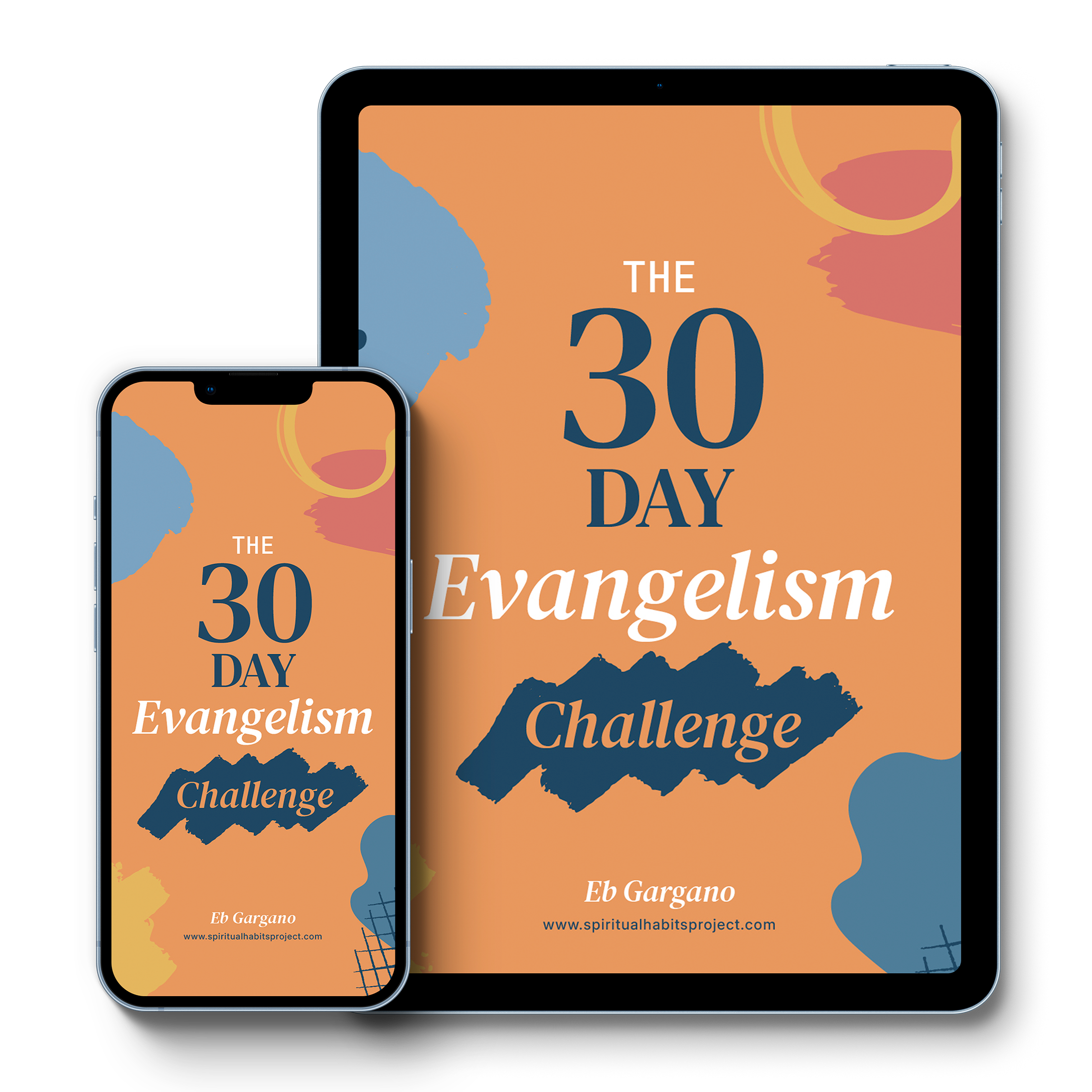
Your next step: The 30 Day Evangelism Challenge
If you want help building a consistent evangelism habit, I invite you to join the 30 Day Evangelism Challenge.
Each day includes:
- A short Scripture passage to read
- A brief teaching on the passage
- A guided prayer activity
- A short evangelism-related challenge to do at another point in the day
- Reflection questions to help you track your growth
Over the course of 30 days, you’ll grow in your knowledge and understanding of Biblical evangelism, and you’ll begin to build a foundation for a regular habit of evangelism.
Join the 30 Day Evangelism Challenge!
Recommended books on evangelism
- Out Of The Saltshaker And Into The World – Rebecca Manley Pippert
- Stay Salt – Rebecca Manley Pippert
- Honest Evangelism – Rico Tice
- The Case For Christ – Lee Strobel
- Evangelism And The Sovereignty Of God – J.I. Packer
READ MORE >>> Recommended books on evangelism
Pin this article

Scripture copyright and permissions
For information about the Bible translations used on this website and their copyright notices, please see the Scripture copyright and permissions page.