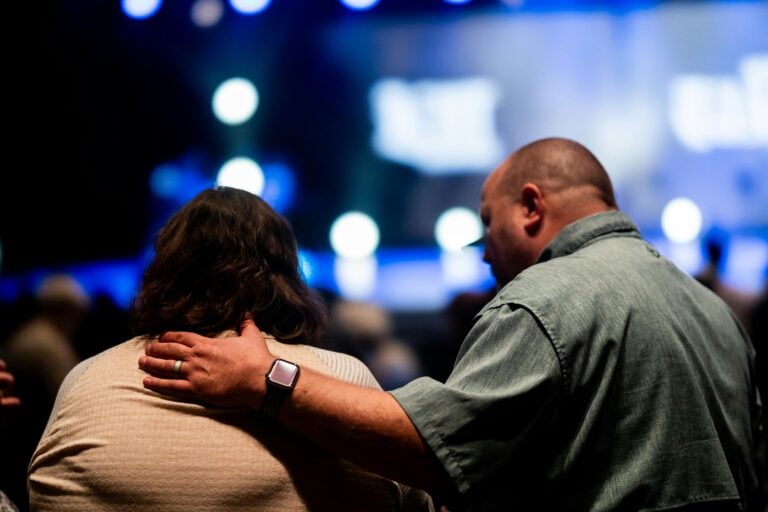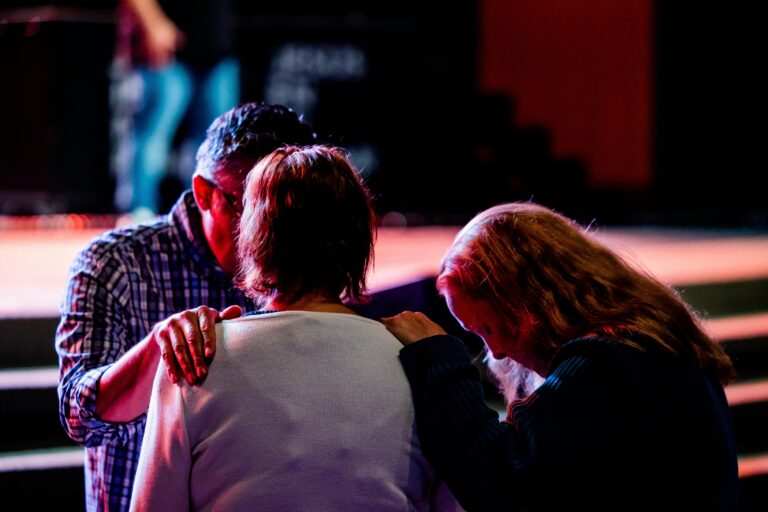
Church attendance has been on the decline for decades. According to the National Churches Trust, over 3,500 churches have closed in the UK since 2014. The Church of Scotland is actively planning the closure of 40% of its churches. About a quarter of churches in Wales have closed in recent years. While in England, over 900 churches are at risk of closure.
For many Christians, “going to church” has become an occasional or optional activity rather than a central part of the Christian life.
At the same time, Christians often talk about the importance of “fellowship”. But what do we actually mean by that? Is fellowship simply chatting over coffee after a Sunday service… or is it something much deeper?
In the Bible, we see that fellowship is not a nice extra for especially committed Christians – it is a core part of what it means to follow Jesus. It is how we grow, how we are supported, how we bless others and how we live out our faith together.
In this guide, we’ll explore what fellowship is, why it matters and how you can take steps to prioritise fellowship in your everyday life.

This article contains affiliate links. This means if you click on a link and make a purchase, I may get a commission, but you will not be charged a penny more. Thanks for your support!
What is Christian fellowship?
The word “fellowship” comes from the Greek word κοινωνία or koinonia (key-non-EE-ah), meaning community, joint participation, sharing and intimacy.
We see this word several times in the New Testament. For example:
“They devoted themselves to the apostles’ teaching and to fellowship (koinonia), to the breaking of bread and to prayer.” – Acts 2:42 (NIV – Greek added)
From the very beginning, fellowship was not an optional add-on to the Christian life. It was something the early believers were DEVOTED to.
The most common expression of Christian fellowship today is, of course, the church.
But Christian fellowship is more than just turning up at church every once in a while, it goes much deeper:
“All the believers were together and had everything in common. They sold property and possessions to give to anyone who had need. Every day they continued to meet together in the temple courts. They broke bread in their homes and ate together with glad and sincere hearts, praising God and enjoying the favour of all the people. And the Lord added to their number daily those who were being saved.” – Acts 2:44-47 (NIV)
This kind of fellowship that the early church was devoted to was:
- Regular (not occasional)
- Relational (sharing life, not just attending church)
- Sacrificial (meeting one another’s needs)
- Joyful and sincere (marked by genuine love and unity)
At its heart, Christian fellowship means sharing a common life, purpose and identity in Christ. It involves worshipping together, learning together, supporting one another and growing together.
But even more than that, Christian fellowship flows from the very nature of God himself. God is not solitary – he exists in eternal relationship as Father, Son and Holy Spirit.
And through Jesus, we are invited into that relationship:
“We proclaim to you what we have seen and heard, so that you also may have fellowship (koinonia) with us. And our fellowship (koinonia) is with the Father and with his Son, Jesus Christ.” – 1 John 1:3 (NIV – Greek added)
Our fellowship with one another is an overflow of our fellowship with God.
Why fellowship matters
We see clearly, throughout the Bible that Christian fellowship is not an optional extra, but rather it is an essential part of the Christian life.
Here’s why fellowship matters…
1. God designed us for community
From the very beginning, we see that we were not created to live in isolation.
“The Lord God said, ‘It is not good for the man to be alone. I will make a helper suitable for him.” – Genesis 2:18 (NIV)
God himself exists in perfect fellowship as Father, Son and Holy Spirit.
Because we are made in God’s image, we too are designed for fellowship – both with God and with one another.
Fellowship is not an “extra” in the Christian life. It is built into who we are. It’s in our DNA!
2. The Bible commands us to meet together
Fellowship is not just a good idea – it is something we are explicitly instructed to prioritise.
“And let us consider how we may spur one another on towards love and good deeds, not giving up meeting together, as some are in the habit of doing, but encouraging one another – and all the more as you see the Day approaching.” – Hebrews 10:24–25 (NIV)
In a culture that often treats church attendance as optional or occasional, this is a strong reminder that gathering regularly with other believers is an act of obedience.
3. We are one body – we need each other
The Bible describes the church as a body, with each believer playing a vital role. No part is independent. And no part is unnecessary.
“Now you are the body of Christ, and each one of you is a part of it.” – 1 Corinthians 12:27 (NIV)
You cannot fully live out your faith alone, because you are designed to function as part of something bigger.
But more than that, the church needs YOU! You are a vital part of the body.
4. Growth happens in community
Spiritual growth doesn’t happen in a vacuum. We grow as we learn from others, are challenged by others and walk alongside others.
“As iron sharpens iron, so one person sharpens another.” – Proverbs 27:17 (NIV)
Left on our own, it’s easy to stagnate or drift. In community, we are sharpened, stretched and strengthened.
5. The church equips us to serve
God has designed the church to be a place where believers are taught, equipped and released to serve.
“So Christ himself gave the apostles, the prophets, the evangelists, the pastors and teachers, to equip his people for works of service, so that the body of Christ may be built up” – Ephesians 4:11–12 (NIV)
Through worshiping together, learning together, praying together and encouraging one another, we are built up in maturity and equipped to live out our faith in the world.
6. Fellowship provides protection and accountability
When we live in close connection with other believers, we benefit from accountability, correction and support.
“But encourage one another daily, as long as it is called ‘Today’, so that none of you may be hardened by sin’s deceitfulness.” – Hebrews 3:13 (NIV)
Other Christians can help us stay on track, notice when we are struggling and point us back to God when we drift.
Isolation, on the other hand, leaves us vulnerable to spiritual attack.
And without the guidance and accountability of a church family, we can much more easily be tricked by the lies of the enemy.
7. The model of the early church
The early church didn’t treat fellowship as occasional or superficial. It was central to their daily lives.
“They devoted themselves to the apostles’ teaching and to fellowship, to the breaking of bread and to prayer. Every day they continued to meet together in the temple courts. They broke bread in their homes and ate together with glad and sincere hearts.” – Acts 2:42 & 46 (NIV)
They shared meals, resources, worship, prayer and life itself. And their commitment to one another was part of their witness to the world.
8. “Lone Christianity” is unbiblical
The idea that we can follow Jesus on our own, disconnected from other believers, is not found in the Bible.
“If one part suffers, every part suffers with it; if one part is honoured, every part rejoices with it.” – 1 Corinthians 12:26 (NIV)
Without fellowship, we miss out on growth, accountability, encouragement and the ability to live out many of the “one another” commands in Scripture.
Simply put: we cannot fully follow Jesus in isolation.
9. Jesus himself modelled fellowship
Jesus did not live in isolation. He gathered a group of disciples and lived in close relationship with them – teaching, eating, travelling and ministering together.
If Jesus chose to live in community, how much more should we?
10. Fellowship should be a joy, not a duty
Fellowship is not something we are meant to endure – it is something we are meant to delight in.
“I rejoiced with those who said to me, ‘Let us go to the house of the Lord.’” – Psalm 122:1 (NIV)
When our hearts are aligned with God’s, gathering with his people becomes a source of joy, encouragement and refreshment.
READ MORE >>> Do Christians have to go to church?
What real fellowship looks like in practice
Fellowship is not just something we believe in – it is something we live out.
Yes, it includes going to church. But real, biblical fellowship goes far beyond simply attending a Sunday service. It is about committing to a church family, sharing life together and actively playing your part in the body of Christ.
But what does that actually look like in practice?
Committing to a local church
Real fellowship starts with commitment.
Rather than drifting between churches or attending occasionally, biblical fellowship involves choosing a specific local church and committing to it. This is the context where relationships are built, accountability happens and spiritual growth takes place.
The New Testament assumes this kind of committed belonging:
“Now you are the body of Christ, and each one of you is a part of it.” – 1 Corinthians 12:27 (NIV)
You are not just a visitor. You are a part of the body.
Showing up consistently
Fellowship requires presence.
That means attending regularly – not just when it’s convenient, not just when there’s nothing better on, not just when you feel like it – but as a priority.
Fellowship is a spiritual discipline, in part because it requires discipline to actually show up week in, week out, even when you don’t feel like it or you’ve had a “better” offer.
“And let us consider how we may spur one another on towards love and good deeds, 25 not giving up meeting together, as some are in the habit of doing, but encouraging one another – and all the more as you see the Day approaching.” – Hebrews 10:24&25 (NIV)
Showing up matters – not just for your own growth, but for the encouragement of others too.
Going beyond the Sunday service
Sunday gatherings are important – but they are only part of the picture.
Fellowship is not confined to a building or a Sunday service.
Real fellowship happens when we move beyond simply attending a service and begin to share life together.
The early church didn’t just meet weekly – they lived in close, daily community:
“Every day they continued to meet together in the temple courts. They broke bread in their homes and ate together with glad and sincere hearts.” – Acts 2:46 (NIV)
This kind of fellowship happens in smaller settings:
- Homegroups or small groups
- Meeting up 1:1 for prayer and/or bible study
- Shared meals
- Meeting for coffee
- Supporting each other in practical ways
- Being present in one another’s lives
It is in these smaller, more intimate gatherings that those deeper relationships are formed and koinonia truly happens.
Fellowship is about doing life together, not just attending events together.
Serving and using your gifts
Fellowship is not primarily about what you receive – it’s primarily about what you bring.
Each believer has been given gifts to serve others and build up the church. Real fellowship means using those gifts to serve others.
“Each of you should use whatever gift you have received to serve others, as faithful stewards of God’s grace in its various forms.” – 1 Peter 4:10 (NIV)
Whether it’s practical service, hospitality, teaching, encouragement or something else – your contribution matters.
Giving and meeting needs
In the early church, fellowship included radical generosity and support for one another.
“They sold property and possessions to give to anyone who had need.” – Acts 2:45 (NIV)
Real fellowship means:
- Giving financially to support the church
- Helping people in your church who are in need
- Being generous with your time, resources and energy
It’s about looking beyond yourself and actively caring for others.
Encouraging and supporting one another
Fellowship involves intentionally building each other up.
Life is not always easy, and we all need encouragement, prayer and support.
“Encourage one another and build each other up…” – 1 Thessalonians 5:11 (NIV)
This might look like:
- Sending a message of encouragement
- Praying for someone
- Meeting up to study the bible with someone
- Walking alongside someone through a difficult season
Worshipping and praying together
Fellowship is not just social – it is deeply spiritual.
We are called to worship God together, pray together and seek him together.
“They devoted themselves to the apostles’ teaching and to fellowship, to the breaking of bread and to prayer.” – Acts 2:42 (NIV)
While it is possible to worship and pray on your own, there is something powerful about gathering with others to worship and pray – it strengthens our faith and unites our hearts.
Living in unity
Fellowship requires humility, grace and a commitment to unity.
We are different people, with different backgrounds, personalities and preferences – but we are called to be one.
“Make every effort to keep the unity of the Spirit through the bond of peace.” – Ephesians 4:3 (NIV)
Real fellowship means choosing love, patience and forgiveness, even when it’s difficult.
Living to bless others
At its heart, fellowship is outward-focused.
It is not about: “What can I get?”
But: “How can I bless others?”
“Do nothing out of selfish ambition or vain conceit. Rather, in humility value others above yourselves.” – Philippians 2:3 (NIV)
When everyone comes with this mindset, the whole church is strengthened.
Real fellowship is rich, active and life-giving.
It is messy at times. It requires effort and intentionality. But it is also one of God’s greatest gifts to us – a place where we grow, belong and experience his love through others.
How to actually “do” fellowship
The theory is all well and good… but how do you actually DO fellowship in real life?
The chances are, you’re already doing some of this. But how can you go deeper? Be more intentional? Truly live out biblical fellowship in your everyday life?
Here are some practical steps to help you get started…
1. Choose a church and commit
If you are not already part of a church, your first step is simple: choose a church and commit.
It’s absolutely fine to visit a few churches to find one that suits you best. But don’t fall into the trap of endlessly searching for the “perfect” church – it doesn’t exist!
At some point, you need to choose a church and say: this is my church family.
2. Attend regularly
Maybe you’re already part of a church, but your attendance is a bit… sporadic.
If that’s the case, one of the simplest and most powerful changes you can make is this:
commit to showing up every single week.
Unless you are away or unwell, make church a non-negotiable part of your life.
And if your church offers multiple services or gatherings, consider going to more than one. The more you show up, the more connected you will become and the more opportunities for koinonia.
3. Join a small group
As we’ve already covered, fellowship is more than merely attending Sunday services.
One of the best ways to experience real, meaningful fellowship is by joining a midweek group.
(Depending on your church, this may be called a homegroup, house group, small group, life group, etc.)
This is where:
- You build deeper relationships
- You are known (not anonymous)
- You can study the Bible and pray together
- You can share honestly and be supported
4. Go to a prayer meeting
Prayer is something we can do alone – but it is also something we are called to do together.
“They all joined together constantly in prayer…” – Acts 1:14 (NIV)
And yet, in many churches, prayer meetings are often the least attended gatherings.
Let’s change that!
5. Serve on a team
Fellowship is not just about receiving – it’s also about contributing.
“Each of you should use whatever gift you have received to serve others, as faithful stewards of God’s grace in its various forms.” – 1 Peter 4:10 (NIV)
One of the best ways to do this is by serving on a team in your church.
This could be:
- Welcoming or hospitality
- Children’s or youth work
- Music or tech
- Practical support or administration
Serving helps you use your gifts (or discover what they are if you’re not sure), build deeper relationships and play your part in the body of Christ.
If you’re not already serving on a team, ask your church leaders how you can get involved.
If you are already serving on a team, consider how you could serve more.
6. Be intentional about relationships
Fellowship doesn’t just happen in formal settings – it happens in everyday life.
This could be:
- Meeting for coffee with someone from church
- Inviting some people from church over for a shared meal
- A one-to-one Bible study with a Christian friend
- A prayer triplet
- An accountability partner or group
These informal moments are often where the deepest connections are formed.
Ask yourself: How can I be more intentional about building relationships with other Christians this week?
7. Pursue unity, kindness and encouragement
Real fellowship requires the right heart attitude.
It’s not just about showing up – it’s about HOW you show up.
The Bible talks about this A LOT!
“Make every effort to keep the unity of the Spirit through the bond of peace.” – Ephesians 4:3 (NIV)
“Let your gentleness be evident to all…” – Philippians 4:5 (NIV)
“Encourage one another and build each other up…” – 1 Thessalonians 5:11 (NIV)
“But the fruit of the Spirit is love, joy, peace, forbearance, kindness, goodness, faithfulness, gentleness and self-control. Against such things there is no law.” – Galatians 5:22-23 (NIV)
“Make every effort to live in peace with everyone…” – Hebrews 12:14 (NIV)
When you are with other believers:
- “Make every effort” to bring about peace and unity
- Be gentle, kind and patient
- Encourage and build others up
- Avoid gossip, complaining or division
8. Be generous and meet needs
A key part of biblical fellowship is caring for one another in practical ways.
This includes:
- Giving financially to the church
- Giving financially to individuals in your church who are in need
- Offering practical help
- Supporting people emotionally
- Being generous with your time and resources
If you are not already, start giving financially to your church. (Pray and ask God how much.)
Then pray and ask God to help you identify one individual or family in your church whose needs you could meet – either financially, practically or emotionally.
9. Schedule it (and make it a priority)
Fellowship is a spiritual discipline – and like all disciplines, it requires intention.
You won’t always “feel like” doing fellowship…
Sometimes your bed will seem so cosy and you won’t want to get up early to go to church.
Sometimes you really won’t feel like going out on a cold blustery winter’s evening to go to homegroup.
Sometimes the lure of the sofa and doomscrolling on social media will feel so much more appealing than meeting up with a friend to pray.
Do it anyway!
Treat fellowship as a fixed, non-negotiable appointment – not an optional extra.
“But seek first his kingdom and his righteousness, and all these things will be given to you as well.” – Matthew 6:33 (NIV)
When you prioritise fellowship, you are prioritising what matters to God.
Fellowship doesn’t happen by accident. It happens when we CHOOSE to show up, CHOOSE to get involved and CHOOSE to bless others.
10. Pray and ask for God’s help
Fellowship is wonderful – but it can also be challenging.
Relationships can be messy. People can be difficult. You may feel awkward, tired or stretched.
That’s why you need God’s help.
“I am the vine; you are the branches. If you remain in me and I in you, you will bear much fruit; apart from me you can do nothing.” – John 15:5 (NIV)
Ask God to:
- Give you his love for others
- Help you step out of your comfort zone
- Give you the discipline to choose fellowship
- Strengthen you when it feels hard
- Grow you through community
You were never meant to do this in your own strength, so don’t try!
Fellowship as a spiritual discipline
Fellowship is considered a spiritual discipline because it requires intention and consistency.
Spiritual growth isn’t about random bursts of devotion or occasional spiritual highs. It’s about building consistent rhythms that shape your heart over time.
Just as exercise strengthens the body, spiritual disciplines strengthen our relationship with God.
Fellowship sits alongside the other spiritual disciplines – like reading the Bible, prayer, fasting, service and evangelism – each one helping us remain rooted in God and formed into the likeness of Christ.
READ MORE >>> What are the spiritual disciplines?
Final thoughts
Fellowship is not an optional extra in the Christian life – it is part of how we are designed to live.
We were never meant to follow Jesus in isolation. We were created for relationship – with God and with one another – and the church is the place where that shared life becomes visible and practical.
Fellowship is not just attending a service. It is committing to a people. It is sharing life. It is serving, encouraging, giving, praying, worshipping, and growing together. It is learning to love real people in real community – not from a distance, but up close.
And yes, it can be messy. It can be inconvenient. It will stretch you.
But it is also one of God’s greatest gifts to you.
Your next step: The 30-Day Fellowship Challenge
If you want help building a consistent fellowship habit, I invite you to join the 30 Day Fellowship Challenge.
Each day includes:
- A short Scripture passage to read
- A brief teaching on the passage
- A guided prayer activity
- A short fellowship-related challenge to do at another point in the day
- Reflection questions to help you track your growth
Over the course of 30 days, you’ll grow in your knowledge and understanding of Biblical fellowship, and you’ll begin to build a foundation for a regular habit of fellowship.
Join the 30 Day Fellowship Challenge!

Recommended books on fellowship
- Spiritual Disciplines Within The Church – Donald S Whitney
- Rediscover Church – Collin Hansen and Jonathan Leeman
- The Living Church – John Stott
- Love Your Church – Tony Merida
READ MORE >>> Recommended books on fellowship
Pin this article
Scripture copyright and permissions
For information about the Bible translations used on this website and their copyright notices, please see the Scripture copyright and permissions page.